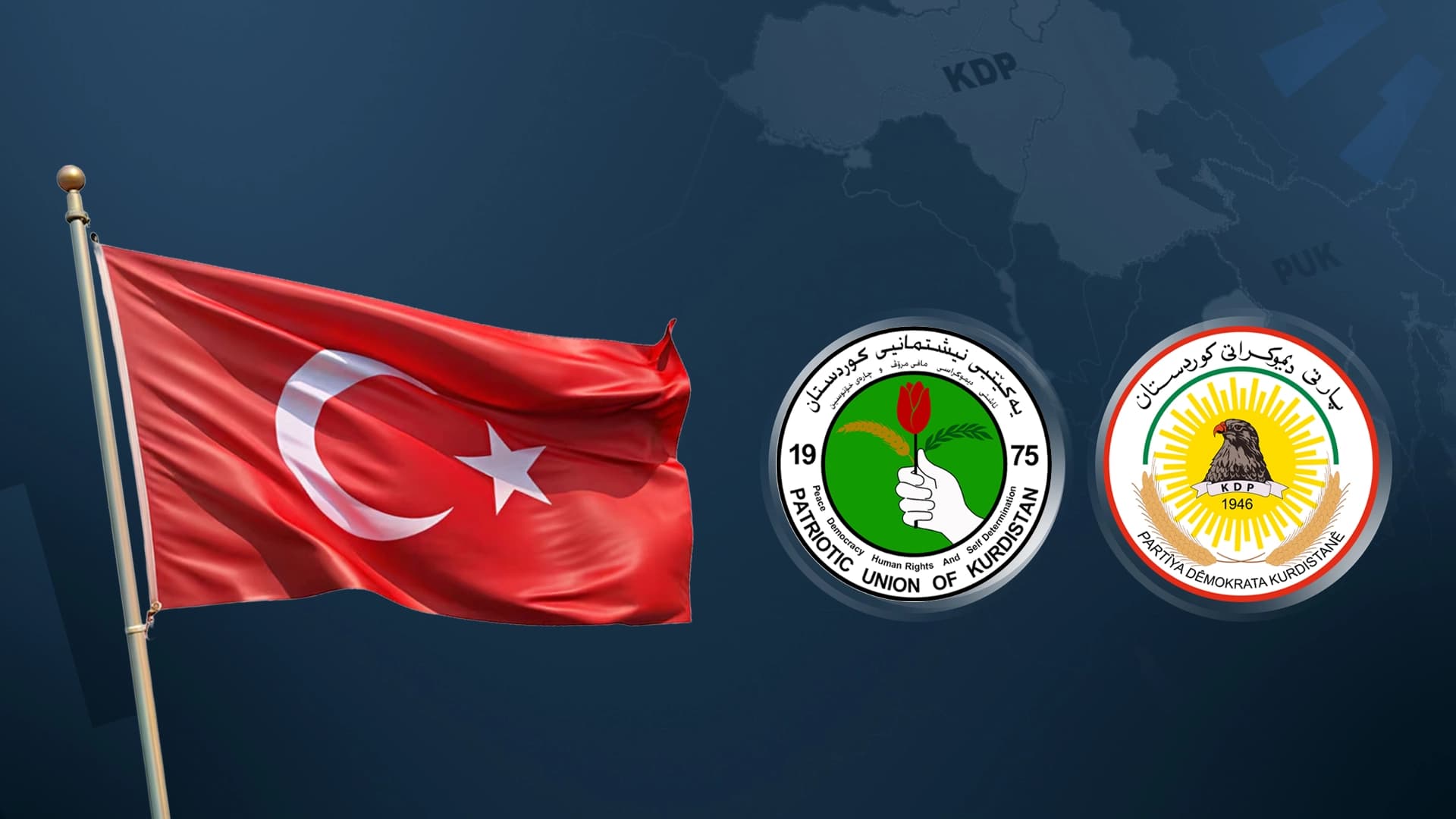

ERBIL, Kurdistan Region - The alarming tension between the Kurdistan Region’s ruling parties – the Kurdistan Democratic Party (KDP) and the Patriotic Union of Kurdistan (PUK) – should not be interpreted merely as an internal issue or another episode in government formation negotiations that have dragged on for more than two years, but one that carries significant implications for regional actors.
The KDP’s reactivation of the parliament, despite the PUK’s sharp opposition and PUK leader Bafel Talabani’s refusal to recognize this process and subsequent withdrawal of his party from the government, coupled with his warning that similar steps would be taken in Sulaimani if a government excluding his party is formed, send signals of regression in the Region.
Meanwhile, KDP President Masoud Barzani's call for the two parties to resolve their differences stood out as a timely statement aimed at easing the political crisis.
Undoubtedly, the predicament facing Iraqi Kurds may offer advantages to Baghdad, Tehran and Iraqi Shiite militias seeking to subvert Region’s constitutional gains.
However, it presents an unfavorable picture for Turkey, particularly in terms of its peace process with the Kurdistan Workers' Party (PKK) as well as its economic, political and security interests in the Region.
KDP-PUK unity: Key to the Region’s achievements
Historically, the Iraqi Kurdish political experience has demonstrated that when the KDP and PUK act in unity, they can achieve significant political gains for the Region, as evidenced by the establishment of the Kurdistan Parliament in 1992 and the recognition of the Region’s autonomy under Iraq’s 2005 Constitution.
Likewise, periods of disunity have also shown how external powers can exploit internal divisions.
In a fragmented Region, the KDP and PUK may secure short-term advantages within their respective spheres of influence, but the long-term consequences could entail an erosion of the Region’s autonomy and further fragmentation in its economic institutions, Peshmerga’s unity, energy sector and political achievements.
The prospect of dual administration in the Region, long considered an island of stability in Iraq, stands out as an internal and direct threat to the Iraqi Kurds, who have remained outside the conflict despite enduring the devastating economic impact of the Iran war and more than a thousand drones and missiles targeting the Region.
Alliance with the Kurds requires mutual mediation
In a previous Rudaw article published in May, I discussed the possibility of Turkey acting as a mediator between the KDP and the PUK during the government formation process in the Region, emphasizing the importance of such a role for Ankara. Given the current state of Region’s politics, it has become clear that this is no longer an option for Turkey, but a necessity.
Ankara’s peace process with the PKK continues to move forward with the mediating role and constructive contributions of the KDP and the PUK. Iraqi Kurdish leaders have demonstrated a sincere commitment to the process, expressing their support from the outset and contributing at various stages, from the negotiations to the disarmament phase.
This also underscores Turkey’s commitment to offering solutions to regional problems and its willingness to rely on Iraqi Kurds, rather than Western actors, in addressing one of the country’s most fundamental challenges.
Alongside the peace process, the restoration of Ankara-Sulaimani ties and Turkey’s efforts to expand its engagement with the PUK, in addition to its close relations with the KDP, present a positive picture in terms of the process's broader implications for Kurdish geopolitics in the region.
Both Erbil and Sulaimani, despite not being party to the US-Iran war, have come under attack from Iran and Shiite militias, and are taking note of Turkey’s efforts to forge new alliances with Kurdish actors in this new volatile regional environment.
However, just as Iraqi Kurds have supported Turkey’s peace process, it also requires Ankara to immediately help address the governance crisis currently facing the Region.
What is at stake for Ankara?
For Turkey, unity between the KDP and the PUK, the Region’s two historic and indispensable political parties, is essential in terms of security, political and economic interests.
Beyond Baghdad, Erbil and Sulaimani have active roles to play in advancing the peace process, considering the PKK’s presence within territories where both parties have influence.
Political disputes between the KDP and the PUK in the Region, particularly if they escalate into further steps over dual administration, could undermine their contributions to the process in which both parties are directly involved.
Rather than coordinating the process separately with the KDP and the PUK, Ankara would undoubtedly be better served by a trilateral, coherent and coordinated approach, which would make the steps taken towards the PKK’s disarmament more effective, sustainable and successful.
Iraqi Kurdish leaders have repeatedly stated that the civil war of the 1990s will never happen again. While such assurances provide an important basis for the Region’s security, the growing tensions between the two parties could still lead to the emergence of separate political administrations, a scenario that cannot be ruled out and would represent the worst-case outcome. Any attempts by armed groups to exploit such a situation would pose a risk not only to the Iraqi Kurds but also to Ankara, which is seeking to secure its southern borders.
Furthermore, the operation of the numerous Turkish companies and investments in the Region, as well as major nationwide projects such as the Development Road, also depend on political stability in the Region.
Turkey’s recent reciprocal steps to restore ties with Sulaimani through high-level contact after nearly a decade of strained relations also render KDP-PUK coordination essential for the potential export of Sulaimani’s substantial natural gas reserves through Turkey.
The dual-administration discussions in the Region would also weaken the collective political leverage of the Kurds in Baghdad, where they serve as a counterbalancing force against Iranian influence, while potentially paving the way for greater Iranian interference in the Region. This would create yet another unfavorable scenario for Ankara.
Ultimately, the rapprochement Turkey seeks to achieve with the Kurds across the Middle East through its peace process, alongside its efforts to develop inclusive relations with Iraqi Kurdish actors, makes it imperative for Ankara to assume a constructive mediating role in the Region.
In this context, Turkey should focus on confidence-building measures between the KDP and the PUK, bringing the two parties together in Ankara following a series of meetings in Erbil and Sulaimani, and helping them overcome this crisis in a manner consistent with the spirit of the peace process and the growing political, diplomatic and regional influence of Iraqi Kurds.
The views, thoughts, and opinions expressed in this article are the author's and do not necessarily represent or reflect the views, positions, or policies of Rudaw Media Network.