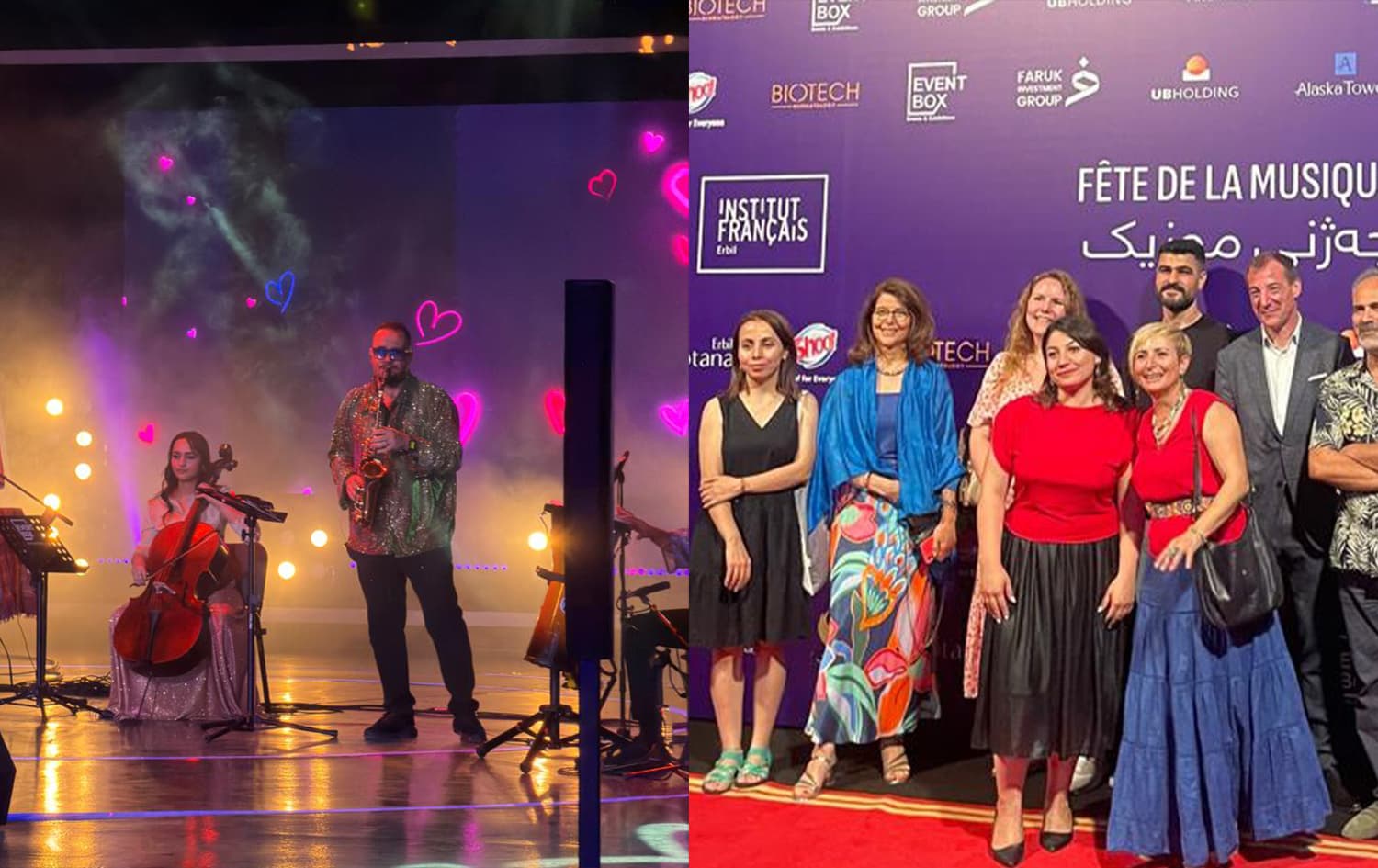
ERBIL, Kurdistan Region - A celebration marking French Music Day showcased a fusion of Kurdish and French music in Erbil on Saturday, promoting artistic exchange and underscoring the cultural ties between France and the Kurdistan Region.
The event featured live performances that blended French and Kurdish musical traditions and was organized by the French Institute in Erbil.
"We value very much the cultural ties that we have between Kurdistan and France," French Consul General Yann Braem told Rudaw English, saying the event reflected strong cultural connections and ongoing artistic collaboration between Kurdish and French musicians through performances that combined elements of both musical styles.
World Music Day, known in French as Fête de la Musique, was launched in 1982 by the French Ministry of Culture and is celebrated annually on June 21, the first day of summer. The initiative aims to make music accessible to the public in countries where France maintains a diplomatic presence.
"Musicians come down in the streets, play instruments, play together in the streets, in the places, in the pubs, and in the cafes so that people can enjoy music without paying, without going to a music hall," Braem said.
Highlighting the potential for future collaboration, he added, "There are very good connections between the musicians… I think this is a model that we can very much develop."
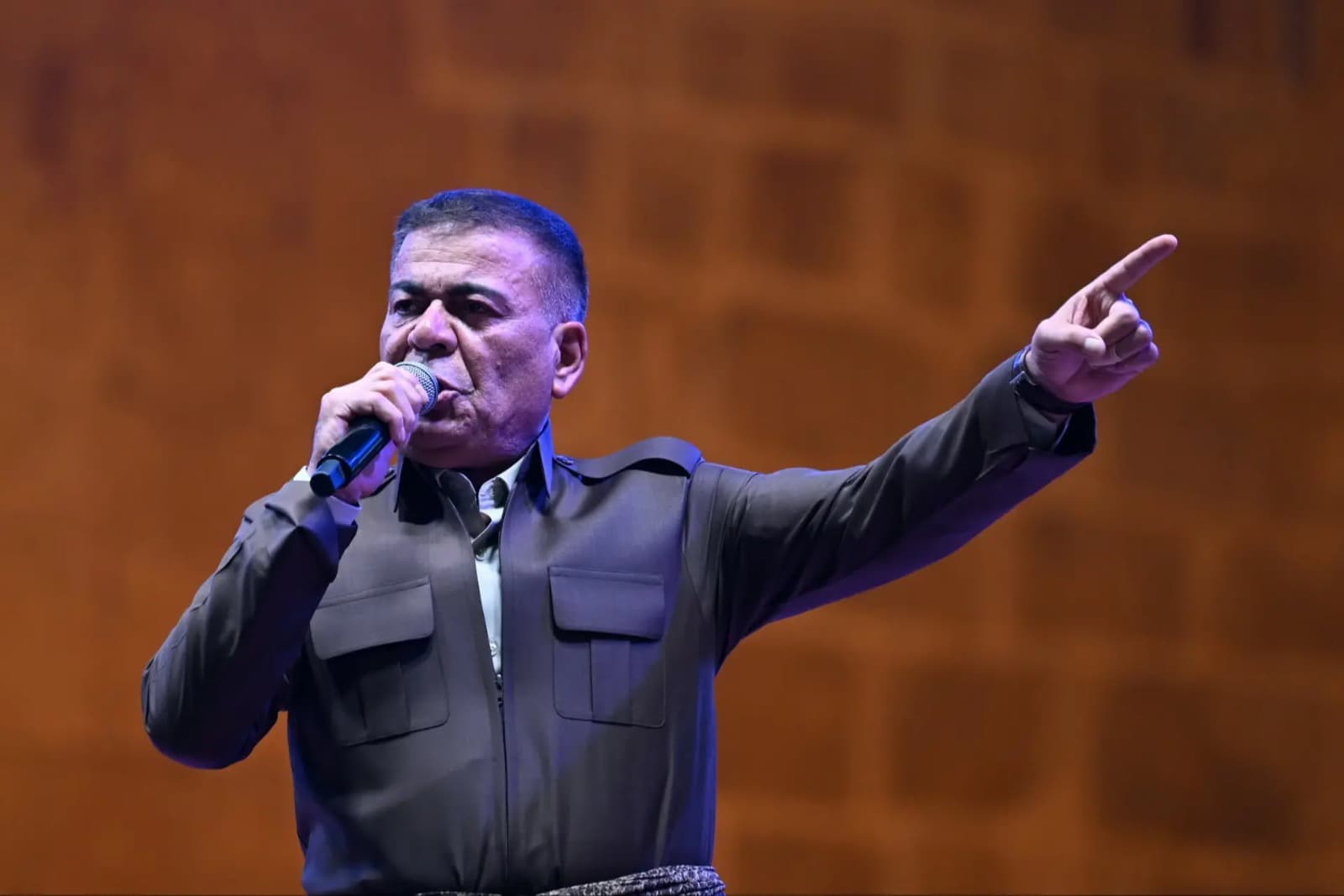
Braem noted that France also hosts celebrations of Kurdish cultural events, including Kurdish New Year (Newroz). He referenced performances by prominent Kurdish musician Sivan Perwer, 70, known for his iconic song "Kîne Em?" (Who Are We?), widely regarded as an anthem reflecting Kurdish history, identity, and resilience.
Perwer performed at the inauguration of Peshmerga Alley in Paris alongside Kurdish singer Alend Hazim, 39. The ceremony was attended by the preeminent Kurdish leader Masoud Barzani and dozens of veteran Peshmerga fighters who fought against the militant group Islamic State (ISIS), serving as an official recognition of Kurdish forces and their sacrifices in the global campaign against the group.
Beyond music, the French diplomat highlighted ongoing cooperation in fashion, painting, cinema, and photography. He noted that annual festivals organized jointly with the German Goethe-Institute across the Kurdistan Region play an important role in strengthening cultural ties.
He emphasized that cultural exchange and cooperation lie at the heart of relations between people, describing them as a strong and enduring bridge connecting communities.
The event also offered Kurdish singers and fashion designers an opportunity to showcase their talents, with custom-designed stage outfits contributing to the visual aspect of the performances.
Mhamad Zalale, a Kurdish fashion designer responsible for creating the musicians' costumes, said he was honored to be invited to design custom shirts for the event.
"It is a proud moment… It demonstrates that Kurdish talent is capable of creating work that meets international and European standards," Zalale told Rudaw English.
He stressed the importance of fashion as a cultural expression.
"Fashion is one of the most powerful cultural industries… it is a universal language that allows us to share our story, our creativity, and our vision with the world," he said.
Music has long held a central place in Kurdish society and cultural identity, often expressed through traditional instruments, poetry, and communal performances during celebrations and social gatherings.
Similar celebrations were held in Sulaimani on Thursday, with additional events expected in Duhok on Monday.