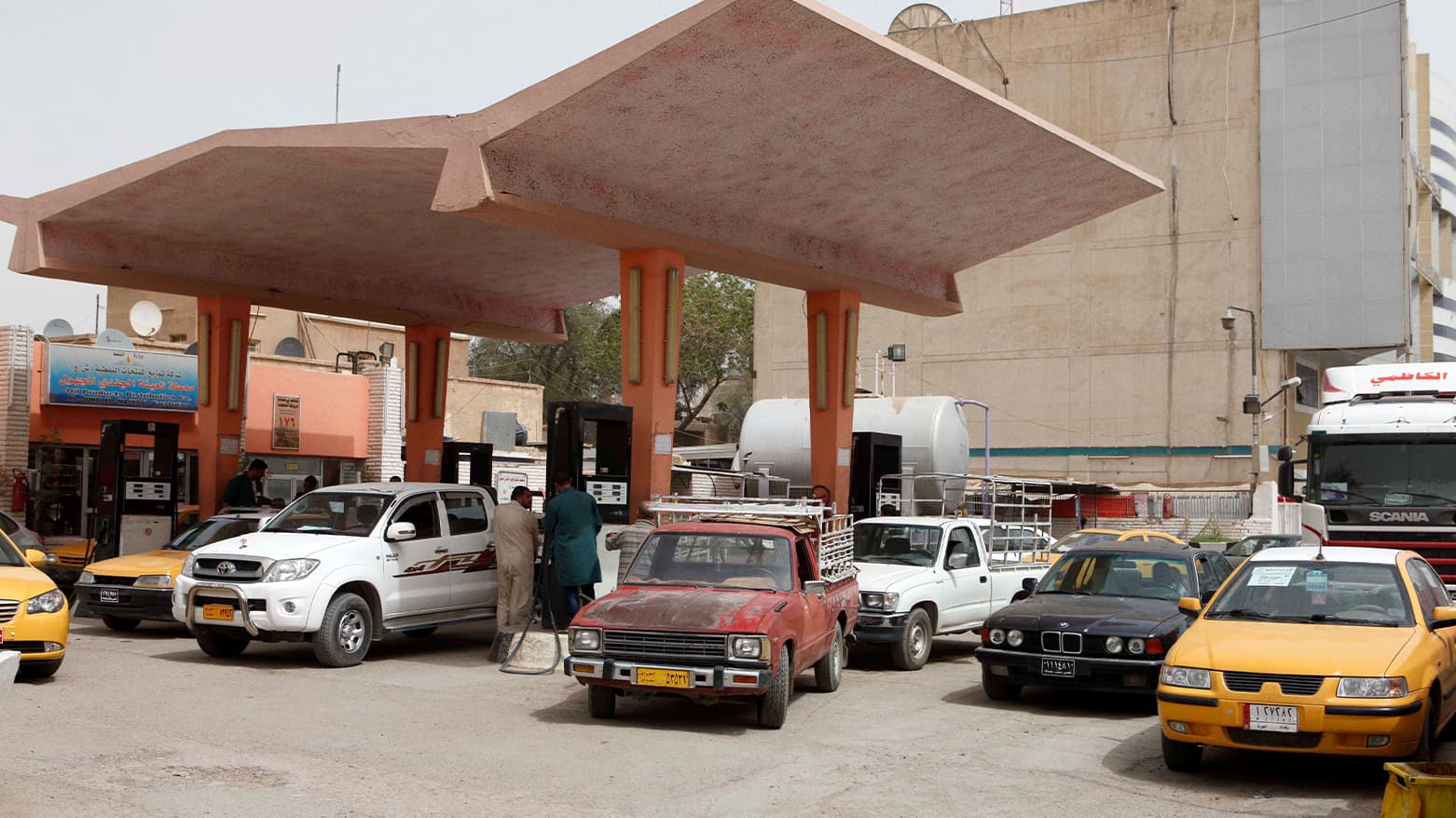
ERBIL, Kurdistan Region - The Iraqi oil ministry announced on Saturday that the government is committed to the US-imposed restrictions on Iranian oil exports, saying that the country will resort to alternative import routes to address rising gasoline shortages.
“To resolve the outstanding gasoline issue, Iraq will import oil through SOMO [State Oil Marketing Organization,” Salim al-Rukabi, spokesperson of the ministry, told Rudaw, adding that Baghdad is committed to the “decision regarding the sanction on Iran” and hence will not export oil from the neighboring country.
Rukabi noted that daily gasoline consumption has reached 34.5 million litres, while domestic production ranges between 30 million and 31 million litres.
The announcement comes as Iraq has faced significant shortages of gasoline production following the US-Israel war against Iran that began in late February, which led to the withdrawal of foreign companies from southern refineries, according to Rafidh Sadiq, head of the state-run Oil Products Distribution Company at the oil ministry, who spoke to Rudaw on Saturday.
Sadiq also said that an abrupt suspension has occurred at the Fluid Catalytic Cracking (FCC) project in southern Basra province - which takes heavy, leftover fuel oil and cracks it into high-standard premium gasoline.
“Regional security incidents and the withdrawal of foreign companies” from southern refineries have resulted in a loss of 4 to 5 million liters of “high-octane premium gasoline,” according to Sadiq.
In November, Iraq announced curbing all gasoline, gas oil, and kerosene imports, declaring a state of self-sufficiency in refining capacity to address domestic needs.
The imports ban was announced weeks after the FCC had become operational, making it integral to the decision.
It also coincided with the deadline set by the US government against purchasing energy from Iran.
However, the companies managing the FCC halted operations in the face of the ongoing regional hostilities.
On February 28, the United States and Israel launched a military campaign against Iran, sparking direct regional confrontations that lasted for nearly six weeks before Washington and Tehran agreed to a ceasefire on April 8.
Iran responded by attacking US interests in the region, including western oil companies operating in Iraq.
The hostilities have drastically reduced Iraqi oil exports to approximately 10 million barrels in April, as opposed to its peacetime equilibrium of over 90 million barrels monthly.
Declining oil revenues have readily impacted the Iraqi government’s ability to subsidize gasoline prices, with Baghdad absorbing the financial loss directly through its state budget, setting fixed, highly discounted retail prices for standard fuel at the pump.
Of note, the Kurdistan Regional Government (KRG) provides gasoline and kerosene from its own refineries independent from Baghdad.
Halting imports from Iran has recently caused gasoline prices in the Region soar from an average of 850 Iraqi dinar ($0.65 cents) to 1175 ($0.90 cents) per litre for regular unleaded gasoline.