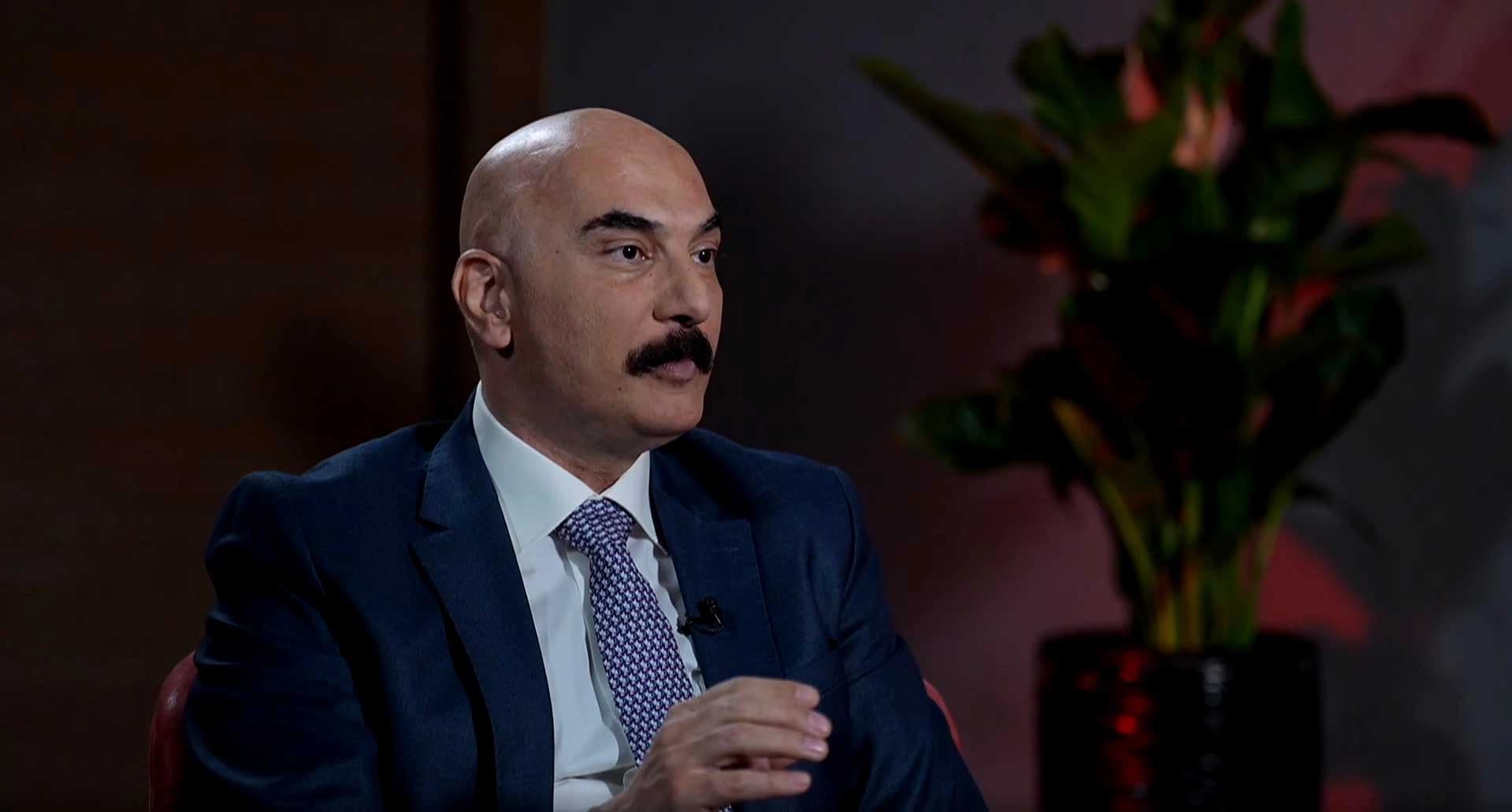
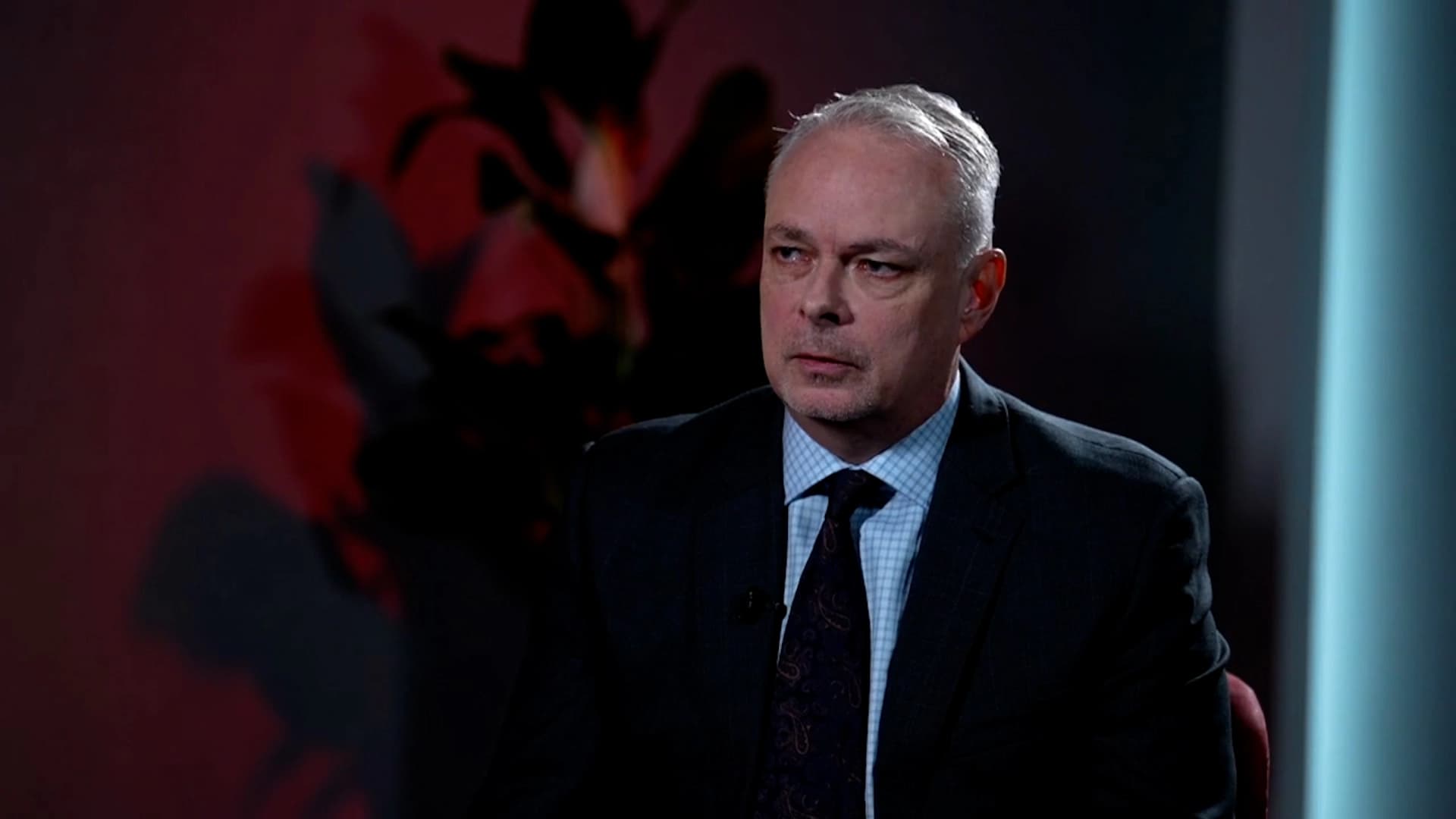
ERBIL, Kurdistan Region - Ukraine is prepared to hand over five Iraqi nationals captured while serving in the Russian military, provided Moscow agrees to include them in a prisoner exchange that would secure the release of five Ukrainian soldiers, Kyiv's Ambassador to Iraq Ivan Dovhanych told Rudaw.
Dovhanych confirmed that five Iraqi citizens are currently being held as prisoners of war in Ukraine, adding that none are from the Kurdistan Region.
"There are five Iraqi citizens, prisoners of war," the ambassador said, adding that they know details about them, but declined to share “because of the protection of personal data. They are not from the Kurdish region. They are from other parts of Iraq."
Last year, the former Iraqi national security advisor Qasim al-Araji said that hundreds of Iraqis were participating in the Russia-Ukraine war and that a government committee had been formed to bring them home.
However, Oleg Gushchyn, legal counsellor at Ukraine’s Coordination Headquarters for the Treatment of Prisoners of War, told Rudaw in August that Iraqi citizens captured on the battlefield are being treated as prisoners of war (POWs), rather than mercenaries.
"Yes, there is [are] Iraqi servicemen, I mean Iraqi fighters, within the Russian armed forces. Yes, we captured some of them. We treat all of them as POWs. No one [is] considered like a mercenary," Gushchyn said.
"The only one thing that I cannot tell you precisely that is [the] number of Iraqi citizens who are within our captivity because of security measure and because of the relation between two countries. But, yes, once again, we have [them]," he added.
The ambassador explained that under the prisoner-exchange framework, captives are handled according to the armed forces in which they were serving at the time of capture, rather than solely on the basis of nationality.
Dovhanych said Kyiv is willing to facilitate their direct return to Iraq, but the arrangement requires coordination with Russia.
"If these five Iraqis will be included in the exchange pool, we are ready to hand them over to Iraq directly, but we have to receive our five prisoners instead of them," he said.
He added that Iraqi diplomats in Moscow have a role in securing the necessary agreement.
"Yes, and this is a task for Iraqi diplomats also in Moscow," Dovhanych said. "We are waiting for the decision."
The Ukrainian ambassador confirmed that communication is ongoing between Kyiv and Baghdad regarding the prisoners.
"We are all in contact," he said, adding that once arrangements are agreed upon and Ukraine is assured of the return of its captured soldiers, the transfer of the Iraqi prisoners could proceed quickly.
Thousands of Iraqis reportedly recruited by Russia
Dovhanych also addressed reports that Iraqi citizens had been recruited to join Russian forces, including individuals allegedly lured by promises of employment, education, or citizenship.
He cited Western media estimates suggesting that approximately 5,000 Iraqis were recruited into the Russian military between 2022 and 2025, while emphasizing that he could not independently confirm the figure.
"According to Western sources, Western media, from 2022 till 2025, there are around 5,000 Iraqis recruited by Russians to their army. I don't know the concrete figure," he said.
The ambassador said the Iraqi government had investigated recruitment networks, arrested suspects, and secured at least one life sentence in Najaf.
He added that Iraqi officials had informed him that recruitment operations on Iraqi territory had ceased, although he did not independently verify that assessment.
Dovhanych warned young Iraqis against recruitment offers that promise jobs, university education, citizenship, or substantial payments in Russia.
"Russian recruiters very often are lying. They are telling that you will have a job in Russia, not explaining what kind of job, or you will study in our university, or you will have our citizenship," he said.
"I would like to warn young Iraqis ... not to believe those recruiters. This is a one-way ticket."
The ambassador distinguished Ukraine's foreign volunteer system from what he described as deceptive Russian recruitment practices, saying Kyiv has not recruited Iraqi citizens to fight on its behalf.
He also acknowledged the suffering of families awaiting news of detained relatives on both sides of the war.
"I understand the pain of Iraqi families, but please understand the pain of our families," he said.
Ukraine offers drone-defense expertise to Kurdistan Region
The Ukrainian ambassador also expressed Kyiv's readiness to share its experience in protecting civilians and critical infrastructure from drone attacks with the Kurdistan Region.
His remarks come as the Kurdistan Region continues to face drone attacks by Iran and its allied militias in Iraq since the outbreak of the US-Iran war. Before the end of mission of the US-led global coalition in Iraq on September 30, Kurdish authorities voiced concerns that the completion of the US withdrawal could leave the Region more vulnerable to attacks, particularly following the removal of American-operated air defense systems.
Asked whether Ukraine would assist the Region in strengthening its defenses against drone attacks, Dovhanych said they are ready “to share our expertise and to show what should be done very fast and for a very cheap price."
He emphasized that Ukraine's experience extends beyond military air-defense systems to civilian protection, including early-warning systems and measures to safeguard power plants and other critical infrastructure.
"The protection of such an object consists of two parts, military and civil. Civil sometimes is much more important than the military," he said.
Dovhanych added that Ukrainian specialists could provide assistance if requested.
"If necessary, we will send our experts," he said, noting that Iraqi specialists could also visit Ukraine to learn from its experience.
However, Ukraine’s embassy in Iraq on Wednesday rejected allegations by media affiliated with Iran’s Islamic Revolutionary Guard Corps (IRGC) that Kyiv had deployed drone units in the Kurdistan Region, dismissing the claims as “completely baseless” and “deliberate disinformation.”
“These allegations are entirely unfounded and amount to deliberate disinformation. Ukraine has not deployed any drones, drone units or related personnel in the Kurdistan Region or anywhere else in Iraq,” said Kyiv’s embassy in Baghdad.