ERBIL, Kurdistan Region - Hundreds of hardliners took to the streets on Saturday in Tehran calling on Iran’s top negotiator Mohammad Bagher Ghalibaf and Foreign Minister Abbas Araghci to resign over a possible memorandum of understanding (MoU) that is expected to be signed on Sunday.
The hardliners believe that Iran won the six week war that began on February 28 but lost out in the negotiations that ensued, compromising on critical issues such as the Strait of Hormuz, the nuclear enrichment program, and the blood of the supreme leader Ali Khamenei in return for possible sanctions relief.
“Death to the dishonorable Araghchi, the capitulator,” a group of men and women waving red banners shouted in Tehran Saturday outside the foreign ministry.
While Araghchi has not confirmed the contents of the MoU, “all details will be shared with the public in due course.”
“If a document is signed,” the crowd chanted, “the person signing it should be killed.”
The hardliners, believed to be part of an orchestrated campaign by the Front of Islamic Revolution Stability, known in Persian as Paydari, discredit the Iranian negotiators because they believe that the US can not be trusted with honoring its commitments.
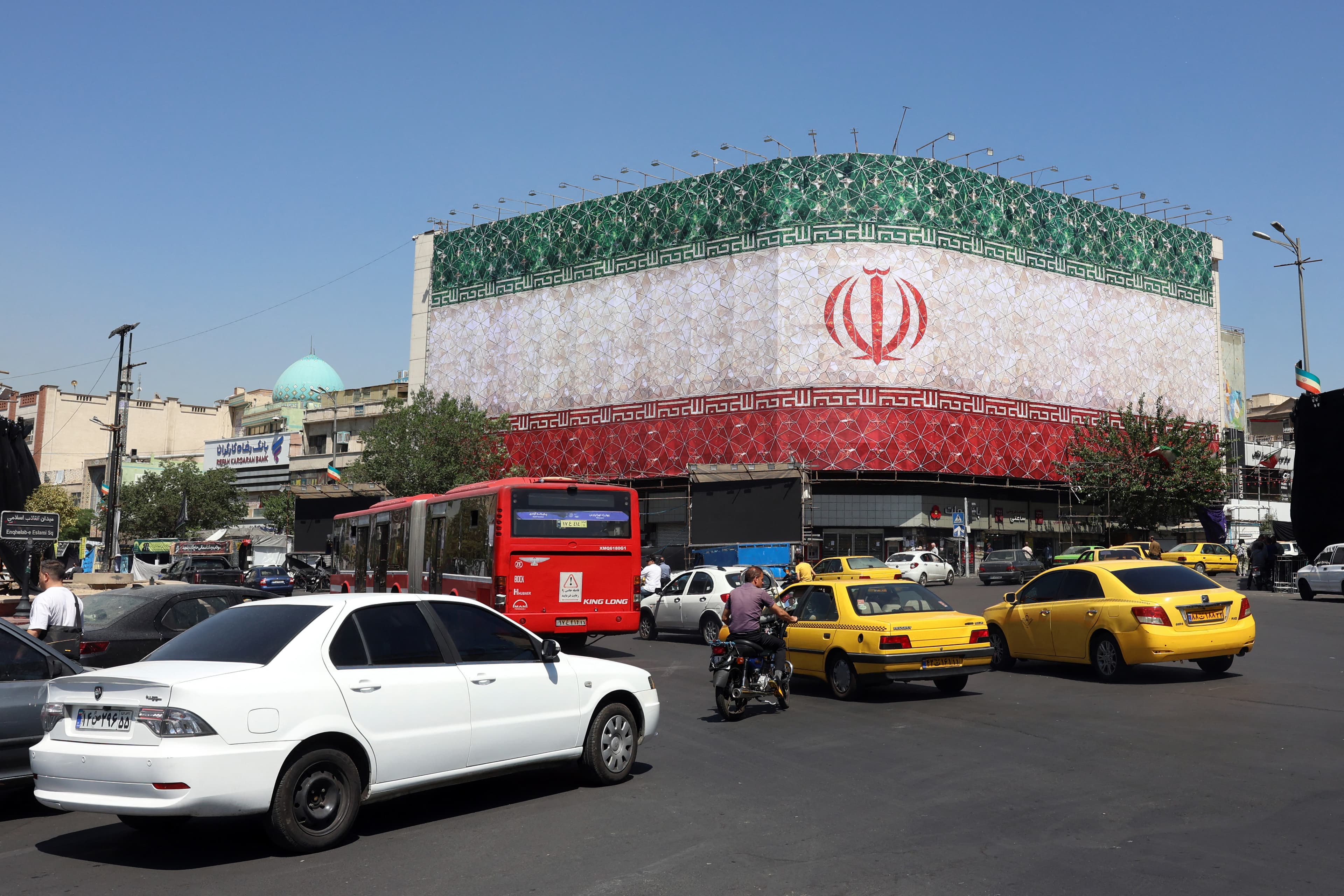
“Ghalibaf, Araghchi — then what about my leader’s blood?” another group of hardliners chanted at Enghlab Square in Tehran, referring to the killing of Supreme Leader Ali Khamenei on February 28 when the US and Israel began an aerial campaign across Iran striking more than 17,000 targets.
The hardliners said the US attacked Iran twice during the 12-day war in June 2025 and the recent six week war as Iran was in the process of negotiating with Washington over the nuclear issue.
The Paydari camp, which has powerful members in the parliament and views the former nuclear negotiator Saeed Jalili as their leader, believes that Iran should wage its war on the battlefield instead of succumbing to negotiations.
The warring parties reached a ceasefire on April 8 before holding a round of negotiations in Islamabad with no tangible result. The US imposed a crippling blockade on Iranian ports bringing Iran oil exports to a negligible amount, increasing pressure on Tehran.
“The blockade will not be lifted through negotiation, the blockade will be lifted by firing missiles,” a banner from the hardliners read in Tehran on Saturday.
The hardliners also argued that the parliament has been forced into recess because of the war and therefore can not adequately debate such a significant document being discussed between the US and Iran.
One hardliner, Mohsen Maghsoudi, who describes himself as ‘a soldier of the Islamic Revolution of Iran,’ insisted yesterday on his X account that, “we do not accept another JCPOA [Joint Comprehensive Plan of Action, widely known as the Iran Nuclear Deal], that imposes another pure disaster on the country, especially under conditions of victory and the upper hand of the Iranian nation,” maintaining that, “today is the time for #StreetCry to be effective as a result of impactful negotiations so that before the signing of the agreement in Iran is finalized, the people have the opportunity to express their unified opinion while maintaining their unity.”
Other hardliners, such as University of Tehran associate professor Foad Izadi, said that Tehran should publish a list of targeted desalination plants and oil facilities in the Middle East that should be completely destroyed by Iranian missiles if the US and Israel dare attack the country again, “in such a way that their reconstruction takes at least two years.”
Operating on the belief that Trump views energy facilities as future reconstruction projects for American companies, Izadi suggested on his X account that “extensive destruction will keep global oil and gas prices high for at least two years,” while Iran prioritizes alternative routes to the Strait of Hormuz.
He urged Tehran to refrain from opening the Strait of Hormuz “for at least another two months,” claiming that the $30 billion worth of oil that Iran has sold in the past three months is sufficient enough to sustain the economy for that period. Izadi called on the government to “not forget to collect tolls from the Strait of Hormuz,” when negotiations are bound to resume, which he estimated “can be more than twice the oil sales.”
Izadi’s warnings drew consensus with Deputy Chairman of the National Security Commission of the Parliament Hajatoleslam Naboyan’s sentiments in an interview Saturday with state media.
“According to the text of the agreement, we will become a colony of America!”