
ERBIL, Kurdistan Region – Iran's Islamic Revolutionary Guard Corps (IRGC) on Thursday claimed two oil tankers caught fire in the Strait of Hormuz overnight, as officials in Tehran celebrated the Republican Party's crushing defeat in the US midterm elections, portraying the outcome as vindication of their strategy in the war with Washington.
The IRGC also claimed its electronic warfare units had seized control of two US-made LUCAS drones and landed them intact.
“Last night, in two separate incidents, a large oil tanker attempting to pass through an illegal route in the southern part of the strait struck a naval mine, caught fire and was brought to a halt,” the IRGC said in a statement carried by state broadcaster IRIB.
“Another supertanker, which was leaving the same shipping route in the eastern Strait of Hormuz, was also brought to a halt by a major fire. A tugboat that approached the supertanker to extinguish the flames also caught fire,” the Guards said.
The IRGC added they remained firmly in control of the strategic waterway, warning that vessels attempting to bypass Iranian restrictions would face further consequences.
The claims could not be independently verified.
The announcement came hours after US President Donald Trump acknowledged that the war with Iran had contributed to his party's sweeping losses in Tuesday's midterm elections, echoing remarks by Vice President JD Vance, who directly blamed the conflict for the Republican defeat.
“I think it’s largely true because it drove the gasoline up a little bit, short term …but at the same if I'd have to do it again, I’d have to do it again because long-term, it’s the only answer. You can’t let Iran have a nuclear weapon,” Trump told reporters on Wednesday in his first public appearance since the elections.
The remarks marked a rare acknowledgement by Trump of the domestic political costs of the war, which has disrupted global energy supplies and driven up fuel prices, adding to concerns over the cost of living among American voters.
Tehran claims vindication
Iranian officials were in a celebratory mood on Wednesday, portraying the Republican defeat as evidence that Tehran's military and economic pressure on Washington was paying off.
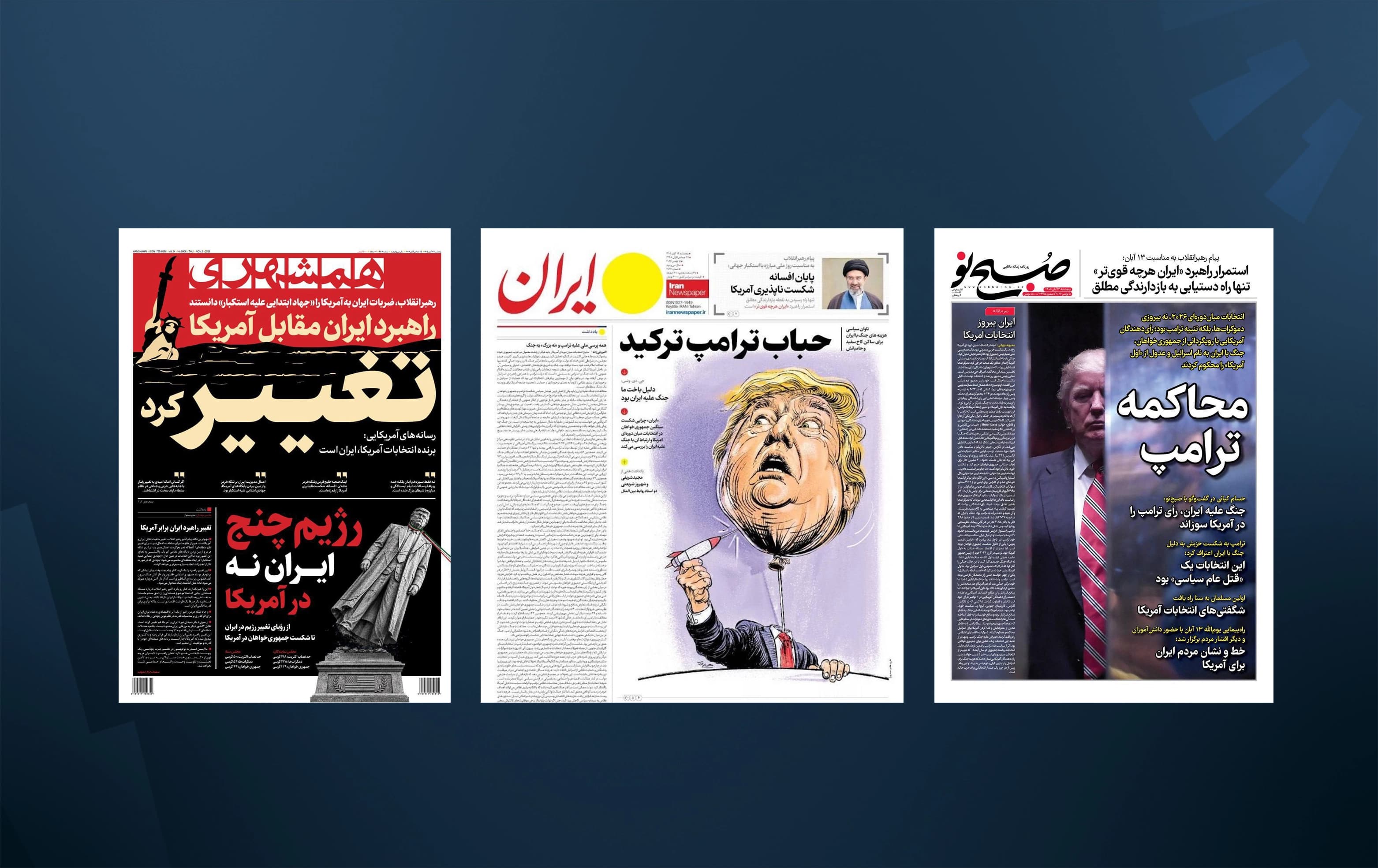
Iran’s government-owned newspaper “Iran” featured a caricature of US President Donald Trump on its front page, depicting his head as a balloon being pierced by a missile-shaped pin.
“Trump’s bubble bursts,” the headline read, with a subheading describing “the political price of the war with Iran for the White House occupant and his supporters.”
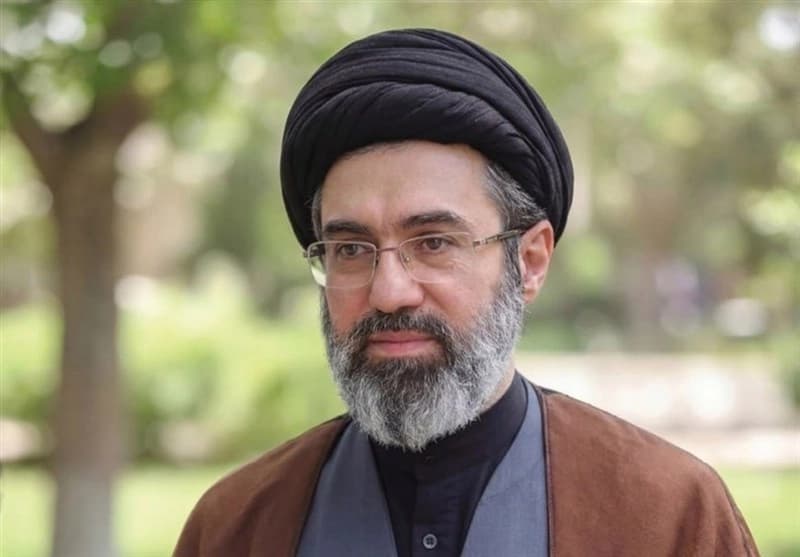
“The end of the myth of America’s invincibility,” read another headline, quoting a message issued by Iran’s Supreme Leader Mojtaba Khamenei on Wednesday night.
Hamshahri, a newspaper issued by Tehran municipality, went one step further and said "Regime change" in red before it answered in white "Not in Iran" but in the "US," again in red.
"From the dream of regime change in Iran to the defeat of the Republicans in the US," the subheading read.
Khamenei’s top lieutenant had an even stronger message. “The Iranian nation handed Trump a strategic defeat on the battlefield and in the Hormuz—and a POLITICAL DEFEAT in Washington. Meanwhile, Americans got stuck with the bill for his war,” Mohsen Rezaei, secretary of Iran's Supreme National Security Council, wrote on X.
“Anyone who takes on Iran will pay the price—from the battlefield to their own doorstep.”
Rezaei, a former IRGC commander who has emerged as a central figure in Tehran's handling of the confrontation and diplomatic exchanges with Washington, has repeatedly insisted that Iran will not compromise on its demands for ending the conflict.
For Tehran, the election results appear to reinforce a calculation that has shaped its strategy throughout the conflict: that Iran can withstand American military pressure while imposing sufficient economic and political costs to weaken Washington's resolve.
Since the United States and Israel launched their war against Iran on February 28, Tehran has increasingly used its position along the Strait of Hormuz, one of the world's most important energy corridors, to disrupt shipping and exert pressure on international oil markets.
“Attempts to violate regulations in the Strait of Hormuz will bring nothing but further financial losses and greater political defeats for the United States,” the Guards warned.