
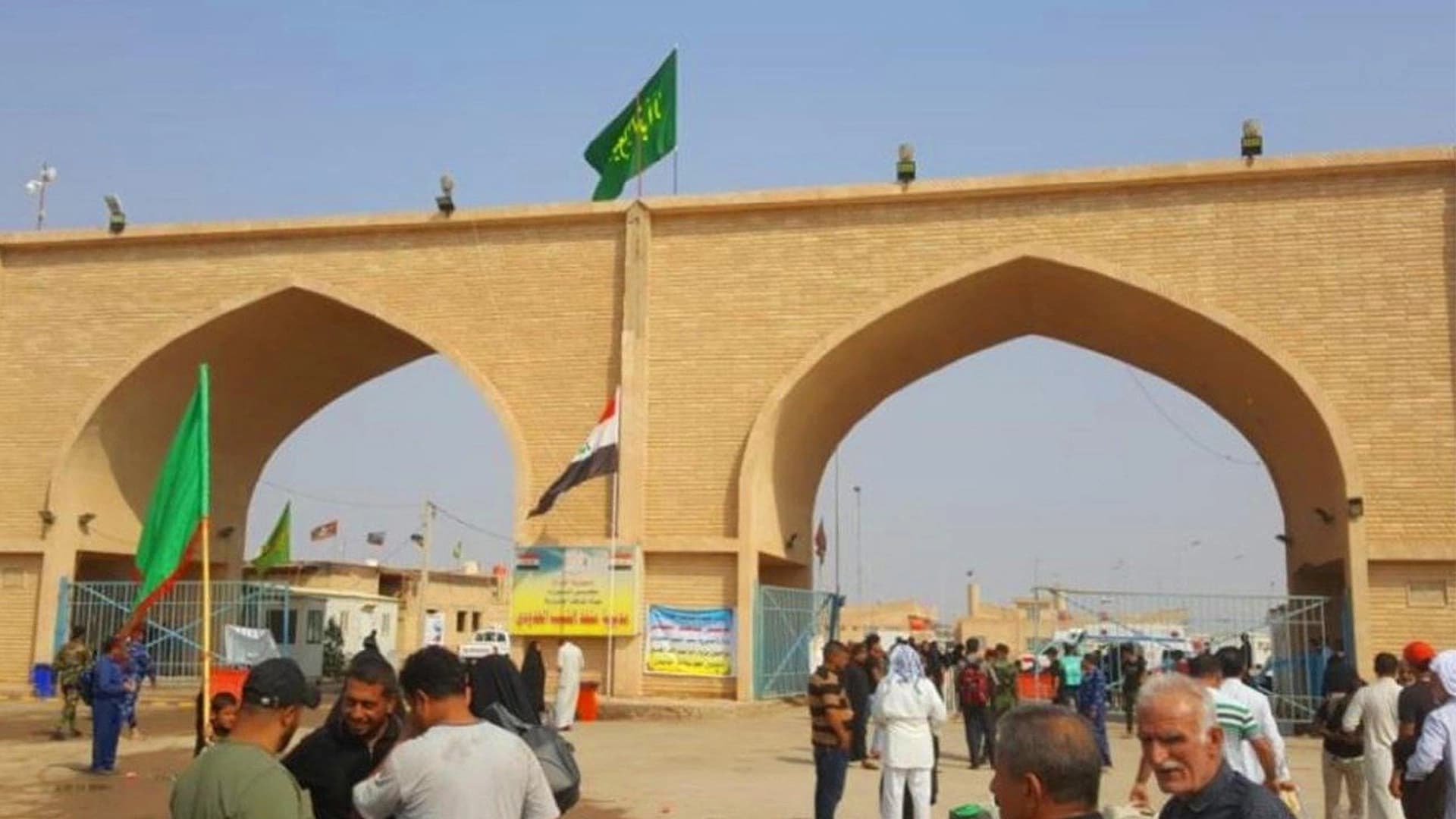

ERBIL, Kurdistan Region - The head of Iraq's Maysan provincial council on Sunday warned the federal government that residents would resort to "civil disobedience" and close major roads connecting the province to the rest of Iraq unless the Sheeb border crossing with Iran was reopened by Thursday.
"If it [Sheeb] is not opened, then the people of Maysan province will be forced to resort to civil disobedience on all roads," Mustafa Daeer Mohammedawi said at a press conference, adding that the Shiite-majority southeastern province would also "be cut off from all of Iraq."
Speaking alongside protesters demanding the reopening of the crossing, many of them truck drivers transporting goods across the border, Mohammedawi warned that those present represented "only one percent" of the province's population.
He threatened larger protests if the crossing remained closed beyond his Thursday deadline.
Mohammedawi's remarks come after the Iraqi government closed the Sheeb border crossing on Wednesday to enhance "its technical and logistical readiness."
"The decision stems from the site's current lack of technical, technological, and developmental preparedness," government spokesperson Haidar al-Aboudi told state media, stressing that other border crossings remained operational "to facilitate the smooth flow of trade with Iran."
Other Iraqi officials have pointed to the smuggling of prohibited goods through the crossing, including counterfeit currency and narcotics, triggering a dispute between Iranian and Iraqi officials.
An Iraqi border official told Reuters on Wednesday that Sheeb had been closed to review security arrangements and install detection equipment "to stop the smuggling of prohibited materials."
Abdul Amir Hassan Ali al-Taiban, an advisor to Iraqi Prime Minister Ali al-Zaidi, alleged that uncontrolled groups and traders on the Iranian side were involved in smuggling.
"If you visit Nasiriyah, Amarah [Maysan's capital] and the south, you will see our plight due to narcotics," he said in an interview on Friday.
Iran's embassy in Baghdad "strongly denied" Taiban's allegations on Saturday, calling on the Iraqi government to "take a stance on claims that harm relations between the two countries."
Yahya Ale Eshaq, head of the Iran-Iraq Joint Chamber of Commerce, said in remarks carried by the state-run Islamic Republic News Agency (IRNA) on Sunday that "with the exception of Chazabeh [the Persian name for Sheeb], the rest of the crossings with Iraq are still operational."
"This situation is temporary, and officials from both countries are following up on the matter to resolve the problem and create the conditions for the resumption of normal activity at this crossing as well," Eshaq said.
Meanwhile, US-sanctioned Iranian business tycoon Babak Zanjani called for retaliatory measures against Baghdad, including restrictions on Iraqi oil exports through the Strait of Hormuz, a strategic waterway that has become a flashpoint between Tehran and Washington since the outbreak of their conflict earlier this year.
Calling the Iraqi premier "arrogant," Zanjani urged further restrictions on a "narrow route" through the waterway that Iran had opened for Iraqi shipping.
"With Iraq's arrogant prime minister closing the border with Iran, it is now time for this narrow route to face further restrictions as well, so that Baghdad understands the true meaning of a border closure and its consequences," Zanjani said.
Iranian Foreign Minister Abbas Araghchi said last week that Tehran was working to open "certain special routes" for Iraqi vessels through the Strait of Hormuz.
At least five maritime drone and projectile attacks have been reported in Iraqi waters since the war began in late February.
