
ERBIL, Kurdistan Region - The German development ministry has pledged its country's ongoing support for Sinjar’s (Shingal) reconstruction and efforts to help displaced Yazidis return home, calling on Baghdad to shoulder the responsibility. Meanwhile, the Nineveh governor cited ongoing budgetary shortfalls for the area.
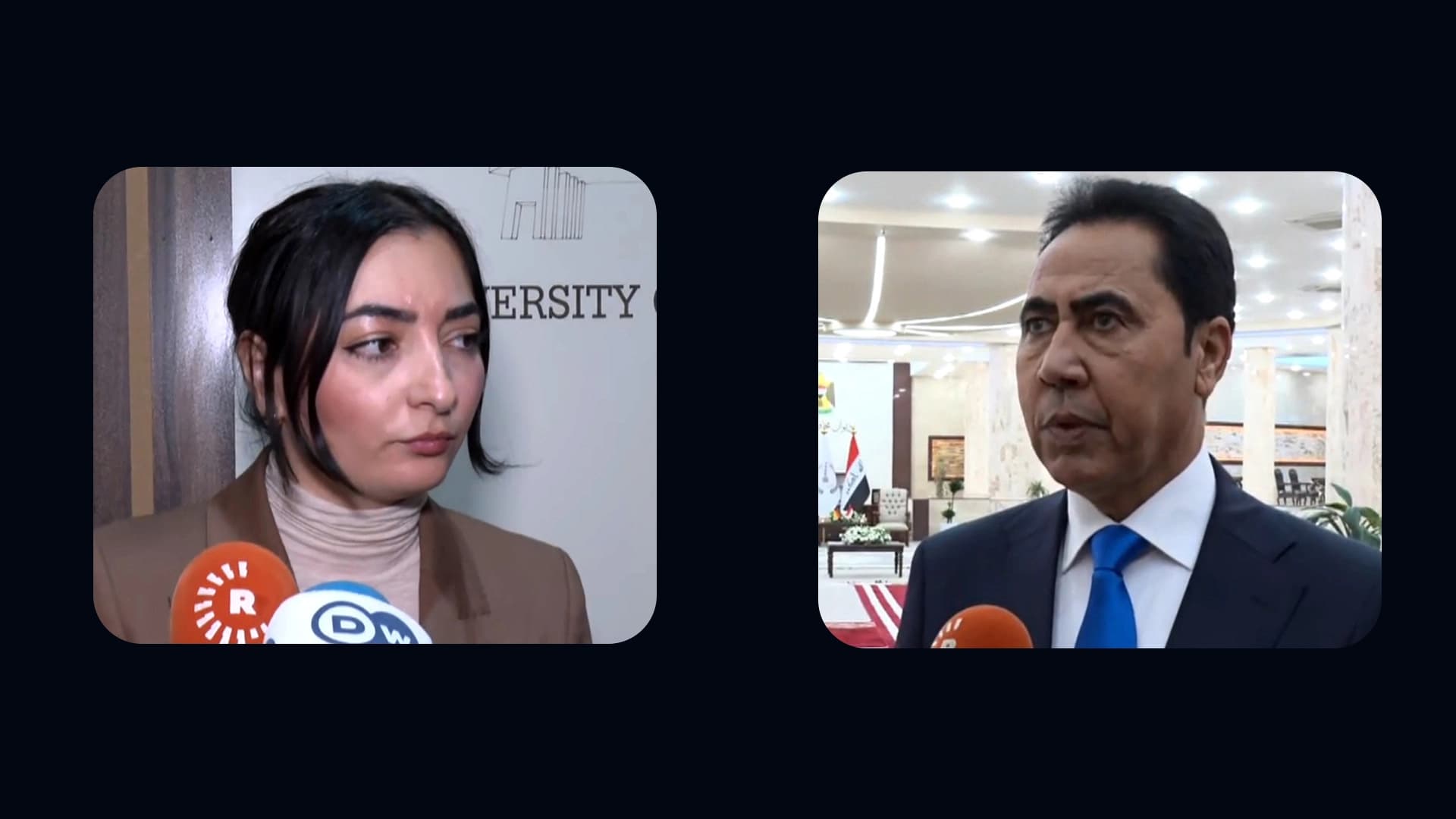
German Minister Reem Alabali-Radovan traveled to the rebuilt University of Mosul to inaugurate the exhibition, “Nobody’s Listening,” featuring artworks created by survivors of Islamic state (ISIS) captivity.
“[Internally displaced people (IDPs)] need the opportunity to return,” Alabali-Radovan said in her speech, focusing attention on the “roughly one million” IDPs remaining in Iraq.
“The state bears a responsibility for this, and it requires clear accountability; for example, regarding who ensures security on the ground and who drives reconstruction forward. If Iraq takes these steps, it can continue to count on Germany's support.”
The minister acknowledged the damage done to Shingal at the hands of ISIS, recognizing Mosul as both a symbol of the “immeasurable scale of violence and destruction” as well as one that demonstrated the possibility of reconstruction.
Shingal was at the forefront of ISIS attacks between 2014-2017 when thousands were killed, abducted, or forced to flee. The United Nations has recognized the atrocities as genocide.
The reconstruction of the area alongside the repatriation of its civilians is a nearly decade-long ongoing process.
The minister said Germany would work with the Iraqi government and the Kurdistan Region to address the challenges facing displaced communities as well as the wider region.
Nineveh Governor Abdulqadir al-Dakhil confirmed to Rudaw’s Alla Shally that there would be “special support” for the district from Germany.
Dakhil said that the Mosul and German delegations had discussed continued support of public universities alongside “a roadmap for cooperation in building and reconstructing heritage areas, as well as regarding the presence of German companies in Mosul.”
The district faces a series of issues, namely a “severe setback” in the budget allocated by Baghdad, he said.
“For nearly a year up until today, no new projects have been established, and we have not been funded with any budget. The three-year budget approved for 2023–2024–2025 caused us great harm and severe injustice,” the governor said.
The governor further cited the financial shortfalls in the Reconstruction Fund for Areas Affected by Terrorist Operations, as well as the Sinjar and Nineveh Plains Funds.
Nevertheless, Dakhil stated that “serious steps” had been taken to address security issues such as the presence of the Kurdistan Worker’s Party (PKK) and integration of the all-Yazidi Shingal resistance units (YBS) in the region.
The YBS emerged as a local armed group that expanded significantly after ISIS attacked the district in August 2014. The group and developed close ties with the PKK, whose fighters helped establish an escape corridor for Yazidis trapped on Mount Shingal during an offensive.
“We hope this file will be closed, and that the mountain and Sinjar will be safe so that when we ask people to return, there will be services, security and stability,” he said.