
ERBIL, Kurdistan Region - Canadian oil producer ShaMaran Petroleum Tuesday announced plans to acquire a 25 percent stake in the development of Iraq’s Hamrin oil field and signed a merger agreement with British oil producer Gulf Keystone Petroleum, marking a major expansion of its operations beyond the Kurdistan Region.
In a statement, ShaMaran said that under the Hamrin agreement, the firm will acquire a 25 percent shareholding stake in HKN Hamrin Ltd., the joint venture holding the entire development and production contract for the field. HKN Energy, which operates the project, will retain operational responsibility as the partners seek to substantially increase output over the coming years.
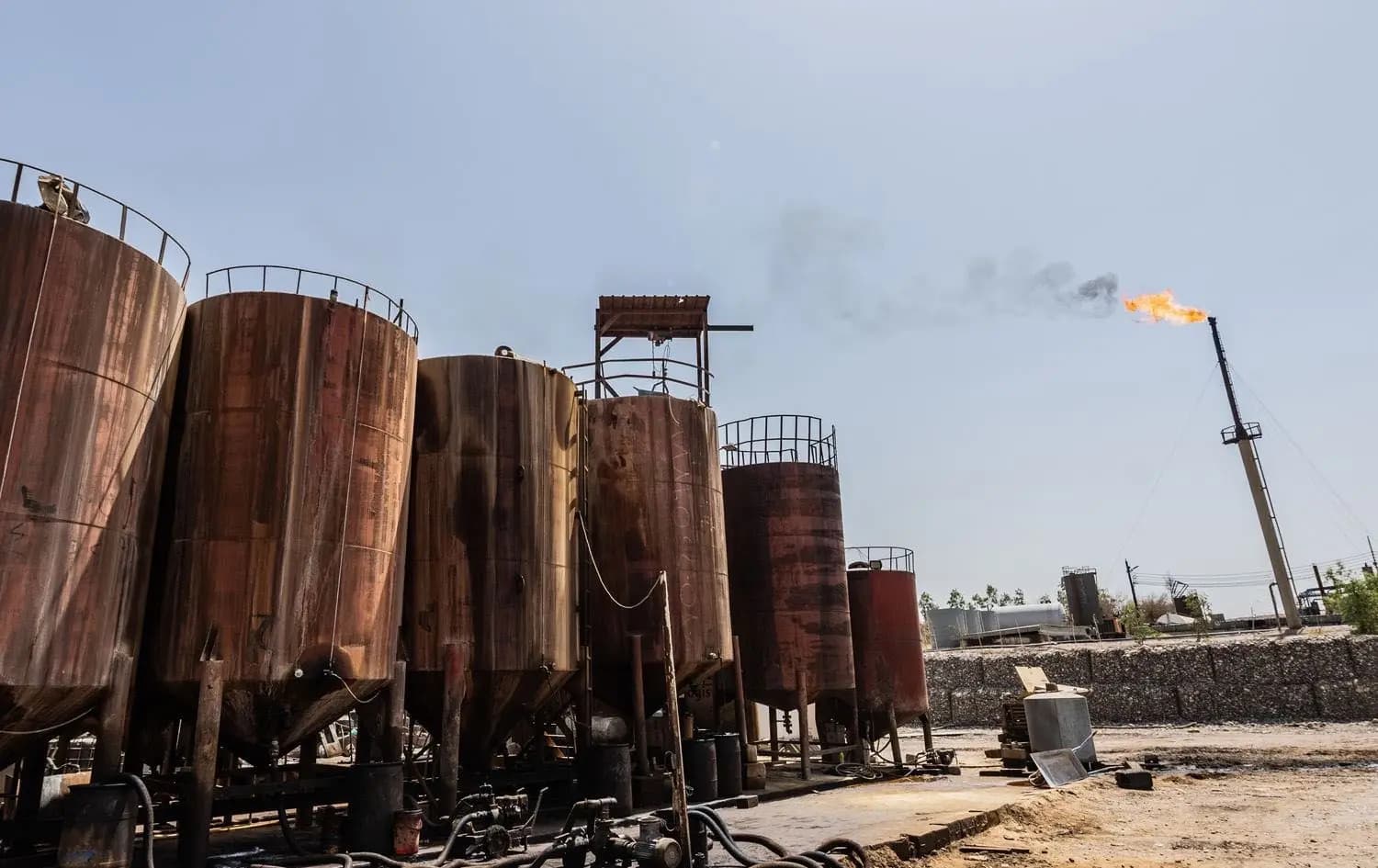
Iraq’s state-owned North Oil Company previously operated Hamrin, spanning the border between the Kirkuk and Salahaddin provinces. Its current production stands at approximately 20,000 barrels per day (bpd), with the initial development phase targeting an increase to around 60,000 bpd by 2028.
“The operator’s and management’s current estimate of remaining gross reserves and resources is in the range of 500 million to one billion barrels,” ShaMaran said, adding that the development contract extends over 25 years, providing scope for further production increases beyond the initial phase.
“The Hamrin investment is a natural extension of our cooperation with HKN, the operator of our two existing assets in the Kurdistan Region of Iraq,” ShaMaran CEO Garrett Soden said.
“The Hamrin field in Federal Iraq is complementary to our existing Kurdistan production and reserves profile, and we expect material synergies from having the same team operate all three assets,” he added.
The company said they were committed with HKN to bolster production to “create significant value for Iraq and our shareholders.”
ShaMaran and Gulf Keystone agree to merge
Separately, ShaMaran and Gulf Keystone announced Tuesday that they had signed both a merger agreement and a combination agreement to consolidate their businesses into a single company, creating a platform for further growth in both the Kurdistan Region and federal Iraq.
In a statement, ShaMaran said the merger would create “a leading independent oil producer” focused on the Kurdistan Region and federal Iraq, combining four major oil fields with estimated working-interest 2P (proved plus probable) reserves of 323 million barrels and further growth potential from its newly announced Hamrin investment.
The merger brings together two established international oil producers with significant exposure to the Kurdistan Region’s upstream oil sector. ShaMaran began production at the Sarsang field in 2014 and the Atrush field in 2017, both in Duhok province.
At Atrush, ShaMaran holds a 50 percent working interest, while the Kurdistan Regional Government (KRG) holds 25 percent and HKN Energy holds the remaining 25 percent and operates the field.
Gulf Keystone operates the Shaikan oil field, one of the Kurdistan Region’s major producing assets. The companies have not disclosed the full financial terms of the merger in the announcement.
The planned combination comes amid renewed efforts to stabilize the Region’s oil sector after prolonged export disruptions and disputes over payments to international producers.
The announcements come as Baghdad and Erbil take steps to address longstanding payment disputes with international oil companies operating in the Kurdistan Region.
Gulf Keystone and ShaMaran on Thursday confirmed that Iraq had begun compensating producers for previous shortfalls in payments for exported crude. The first additional oil cargo allocated by Iraq’s State Oil Marketing Organization (SOMO) marked the beginning of a process to reconcile earlier payments with companies’ contractual entitlements based on international oil prices.
“The commencement of the top-up payments is a significant positive milestone for the Company and the Kurdistan oil industry,” Gulf Keystone CEO Jon Harris said in a statement at the time.
Harris said receiving full entitlements under the companies’ production-sharing contracts was consistent with Iraq’s amended budget law and their contractual arrangements.
The additional cargoes are intended to begin settling outstanding payments for oil exported between September and December 2025 under interim arrangements involving Baghdad, Erbil and international producers. The companies have not disclosed the total value of the compensation or their individual expected payments.
Oil exports from the Kurdistan Region through the Iraq-Turkey pipeline resumed in September 2025 under agreements involving the federal government, the KRG and international oil companies. Under the interim arrangements, producers receive allocated oil cargoes that are marketed through an appointed firm, with additional barrels intended to make up the difference between initial payments and full contractual entitlements.