ERBIL, Kurdistan Region - More than 4,000 historical manuscripts at Sulaimani's Awqaf Library have been cataloged, with around 400 digitized, as the first phase of a joint project to preserve the collection and make it accessible to researchers worldwide has been completed.
Announced at a ceremony in Sulaimani on Tuesday, the first phase concluded after more than a year of work by the Kurdistan Center for Art and Culture (KCAC), the University of Exeter and the Kurdistan Regional Government's (KRG) Ministry of Endowment and Religious Affairs, with support from the British Library.
The collection includes manuscripts dating back as far as 800 years, covering religious studies, astronomy, literature and other fields. Preserving the documents and making them accessible could help researchers study centuries of Kurdish and regional intellectual history.
“One of the manuscripts that is a source of pride in the Sulaimani Awqaf Library is the manuscript of al-Zamakhshari's Al-Kashshaf [book],” Sabah Barzinji, a professor and researcher, told Rudaw's Nizar Jaza at the ceremony, referring to Abu al-Qasim Mahmud ibn Umar al-Zamakhshari - a medieval Muslim scholar of Iranian descent.
According to Barzinji, the work dates to the eighth century AH (the Islamic lunar calendar, corresponding to the 14th century CE) and consists of four large volumes. It includes a teaching authorization documenting its owner's study of the text under a scholar’s supervision.
The library holds rare works in several languages, including Kurdish, Persian, Arabic and Turkish, according to Farangis Ghaderi, head of the Kurdish Studies Center at the University of Exeter.
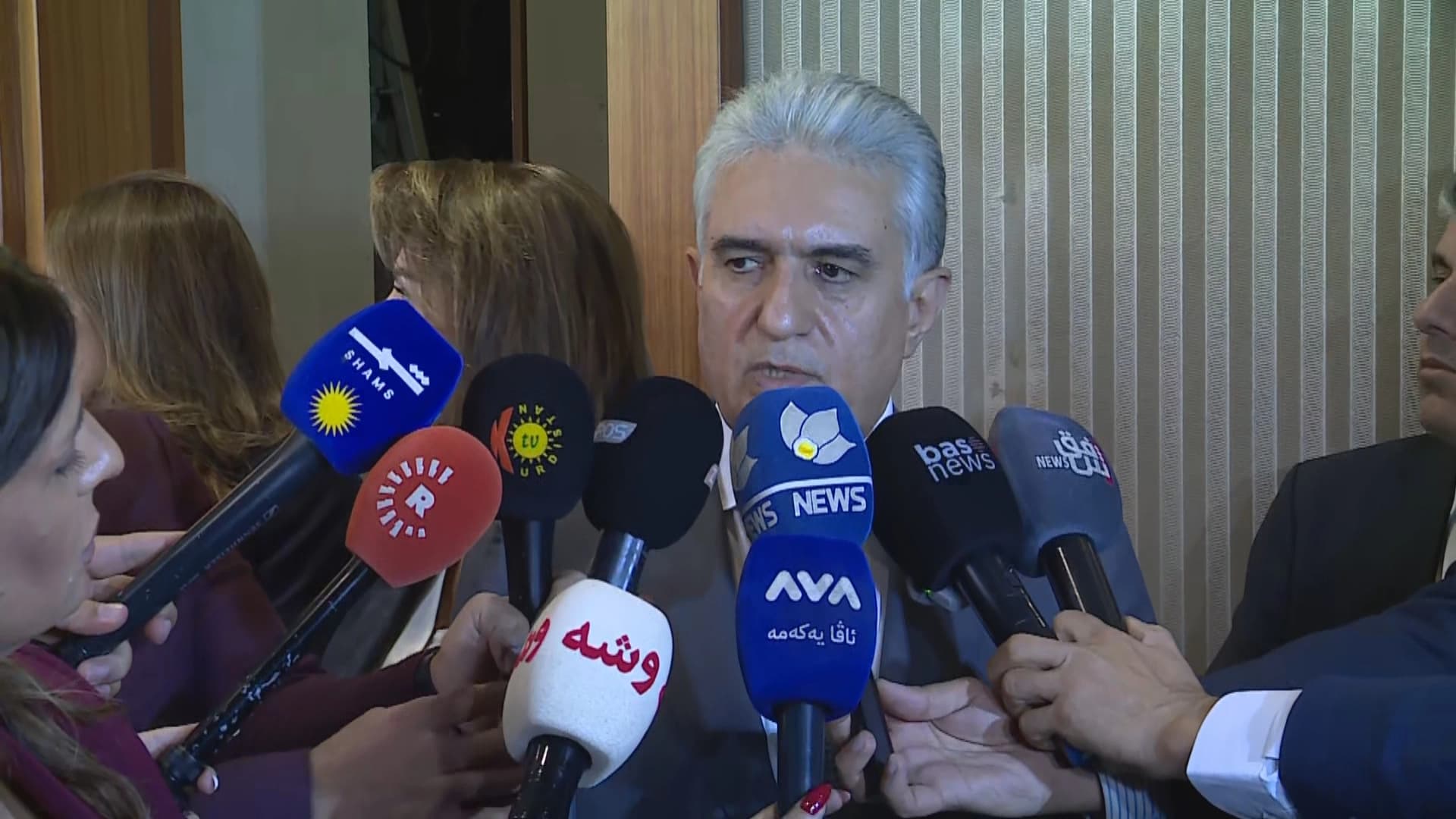
Fatih Reber, the KCAC's director of communications, said that all 4,000 manuscripts have been cataloged, while around 400 have been scanned, adding that in the next phase “all the manuscripts will be scanned, meaning anyone anywhere in the world will be able to view and look at them. Another part of it is better preservation."
Kawsar Muhammad, director of the Awqaf Library, said the catalog had transformed the library to a better state.
“From now on, we can take further steps to be able to clean up the manuscripts and do more serious work on them so that they are more available to researchers and universities," she said.
The collection dates back to the libraries of the Baban principality during the Ottoman era. The manuscripts were later transferred to Sulaimani's Grand Mosque before being housed at the Awqaf Library.