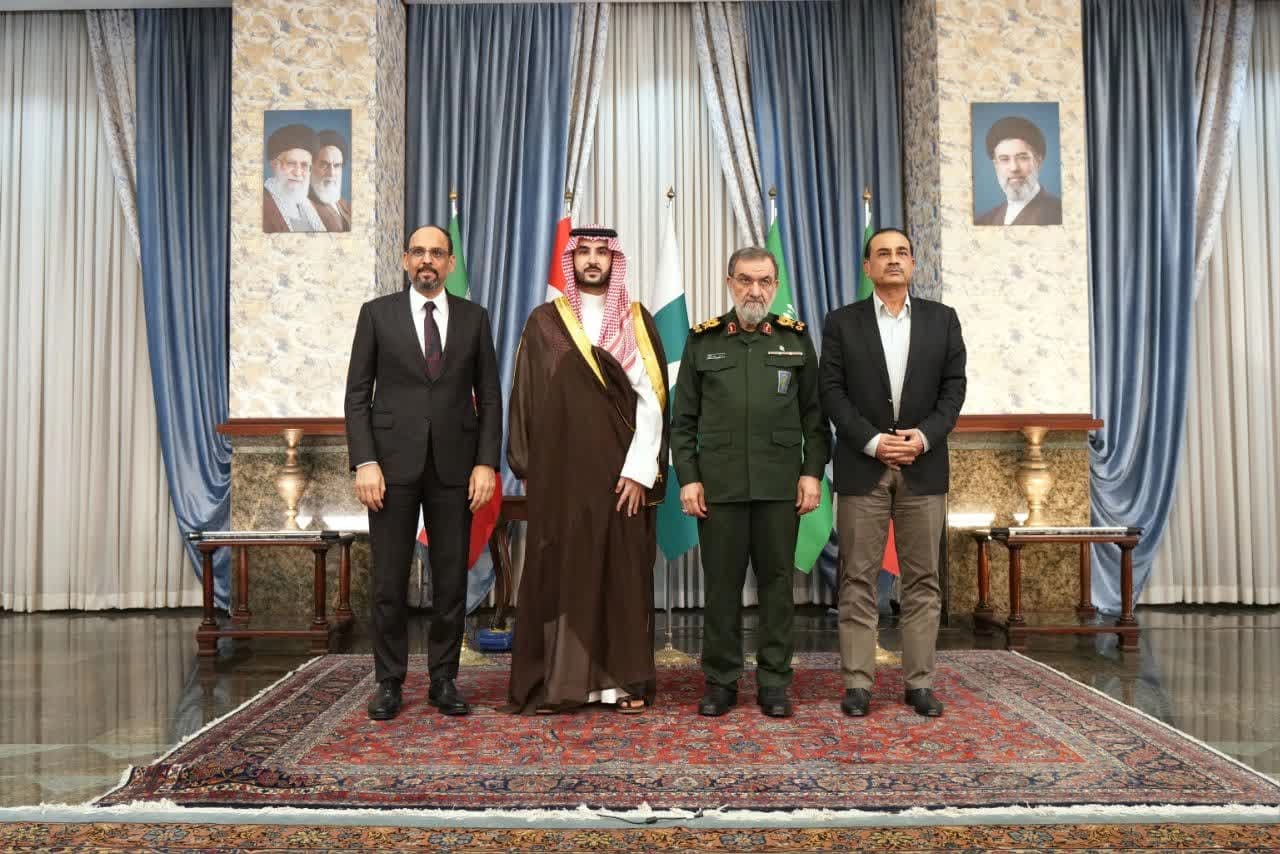

ERBIL, Kurdistan Region - Delegations from Pakistan, Turkey and Saudi Arabia arrived in Iran on Monday with regional security and the US and Israeli attacks on Iran topping the agenda, state media reported, as Tehran braces for a potential renewed outbreak of hostilities.
The meeting was held at Pakistan’s proposal with Secretary of Iran’s Supreme National Security Council Mohsen Rezaei as its host. Pakistan was represented by Army Chief Asim Munir, Saudi Arabia by Defense Minister Khalid bin Salman, and Turkey by intelligence chief Ibrahim Kalin, state-run Islamic Republic of Iran Broadcasting (IRIB) reported Monday.
Iranian president Masoud Pezeshkian also met with delegations of the three countries and stressed the need to strengthen unity and cooperation among Islamic countries, IRIB reported in a separate statement.
Iran “is ready to take steps towards deepening regional cooperation, resolving differences, and utilizing the shared capacities of Islamic countries, and to support any understanding that leads to strengthening unity, cohesion, security, and development of the region," Pezeshkian said.
Early August this year, Saudi Arabia, Turkey and Pakistan signed the Mecca Joint Defense Agreement to strengthen collective deterrence against acts of aggression, stipulating that any armed attack against any one of the three states is an attack against all. It further provided for the enhancement of all aspects of defense cooperation among the three states.
The Saudi Ministry of Foreign Affairs framed the meeting as part of ongoing efforts to “de-escalate between the parties to the current crisis, encourage dialogue and diplomatic solutions, and support the mediation efforts being carried out by the State of Qatar and the Islamic Republic of Pakistan” within the framework of the pact.
In mid June, the United States and Iran signed the Islamabad Memorandum of Understanding, brokered by Pakistan with Qatar's support, to establish a framework for ending hostilities and pursuing a broader agreement, Pakistan’s Prime Minister announced in a post on X at the time.
However, the understanding failed to produce a lasting settlement. Military tensions subsequently escalated, with the United States resuming its naval blockade of Iranian ports in mid-July and carrying out strikes on Iranian military targets, as Iran’s oil exports are down to zero.
Iranian strikes on ships in the Strait of Hormuz have surged significantly since the start of October with at least 30 vessels being reported and confirmed, marking the month with the highest number in incidents since March, according to the Washington Institute.
Meanwhile, the UK government announced in a press release on Tuesday additional defensive military support for Saudi Arabia amid escalating Iran-backed Houthi attacks, including attacks on civilian targets such as Riyadh's King Khalid International Airport.
The developments come amid renewed threats between Washington and Tehran, nearly eight months after the United States and Israel launched a military campaign against Iran on February 28.
Speaking at a rally in Florida on Friday, US President Donald Trump raised the possibility of further military action against Iran if Tehran refuses to reach an agreement with Washington.
"We may do another little Operation Epic Fury," Trump said, referring to the US military campaign against Iran.