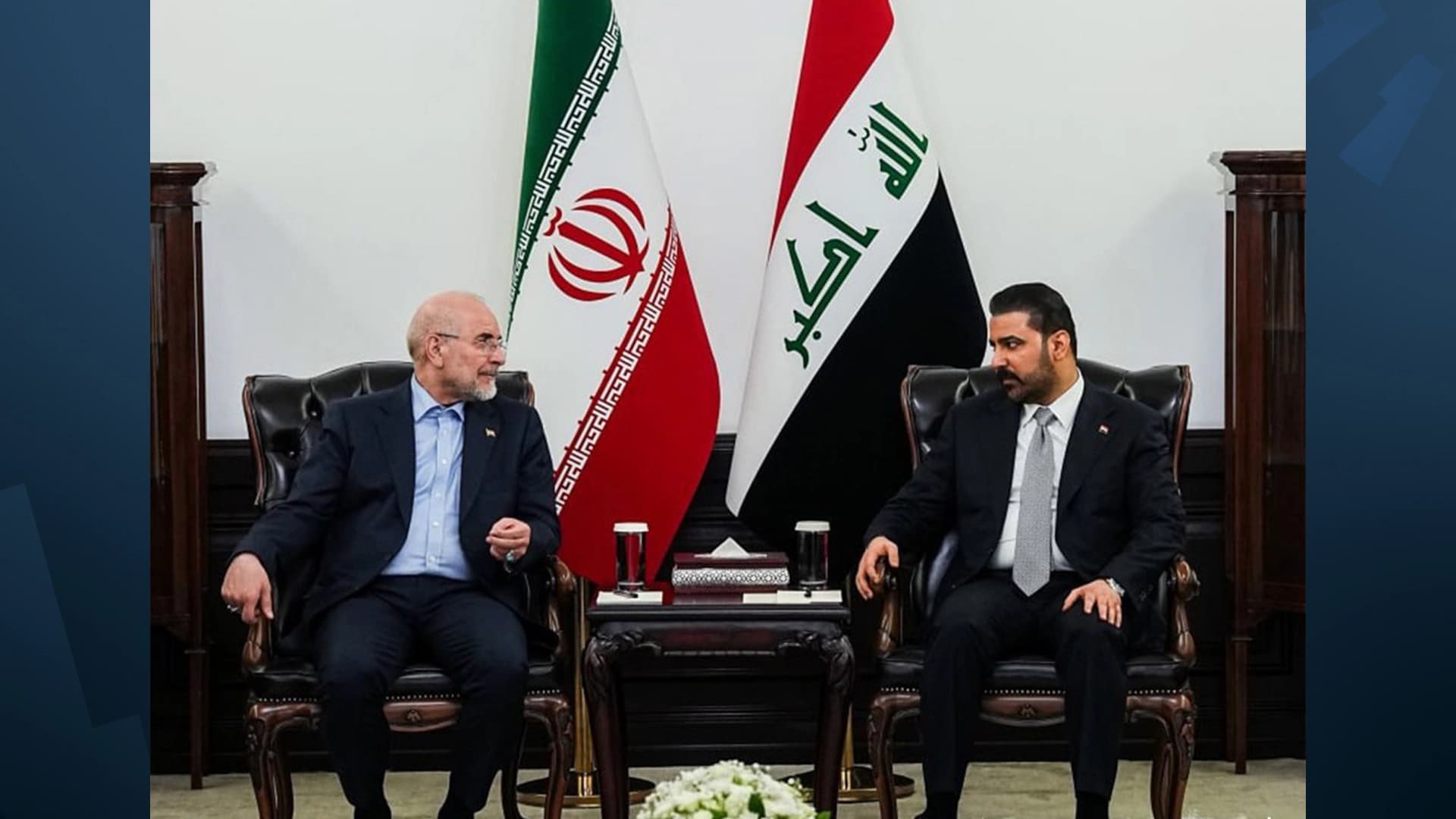

ERBIL, Kurdistan Region - Iraqi Prime Minister Ali al-Zaidi held undisclosed meetings with Iran's parliament speaker and chief negotiator Mohammad Bagher Ghalibaf in Tehran over the weekend, with talks focusing on Baghdad's efforts to end the war between Iran and the United States, both Iraqi state media and Islamic Revolutionary Guard Corps (IRGC)-affiliated media reported Monday.
“Falih al-Fayyadh, head of Iraq's Popular Mobilization Forces (PMF), and Hadi al-Amiri, commander of the Badr Organization, accompanied Zaidi during the visit” on Friday, Tasnim news agency reported, citing unnamed sources, confirming meetings with Iranian President Masoud Pezeshkian and Ghalibaf during his visit to Tehran.
The Iraqi premier “travelled to Iran after holding talks with [US President Donald] Trump and [US envoy to Iraq and Syria] Tom Barrack” but “did not receive any outcome during the visit that would be welcomed by the Americans.”
Iraqi Ambassador to Iran Yasser Abdulzahra al-Hajjaj likewise confirmed the visit, telling the state-run Iraqi News Agency (INA) on Monday that al-Zaidi's trip was “a private and unannounced visit aimed at discussing ways to reduce tensions and defuse the threat of war in the region.”
Iran’s semi-official Fars news agency said the visit occurred on Friday, citing an informed source, and disclosed that the conversation “focused on Iraq's efforts to end the war between Iran and the United States and had no connection to other issues.”
The reported undisclosed visit follows a telephone call between Zaidi and Trump on Thursday, discussing regional developments, security issues and prospects for the next phase, according to a statement from the Iraqi prime minister's media office, as the Iraqi premier advances efforts to bring armed factions under state control.
During the phone call with Trump, Zaidi reaffirmed Iraq’s position to prevent Iraqi territory from being “used as a launchpad for attacks against neighboring countries, and the need to pursue peaceful solutions and constructive dialogue to safeguard regional security.”
Barrack on Friday lauded Zaidi's efforts in advancing regional stability and in “choosing sovereignty over dependency, investment over stagnation, and partnership over proxy.”
Iranian Foreign Minister Abbas Araghchi said on Saturday that he discussed regional security arrangements in phone calls with counterparts from 12 countries over the past 48 hours, the Iranian Students News Agency (ISNA) reported.
Tensions between Baghdad and armed factions of the pro-Iran Islamic Resistance in Iraq (IRI) continue to mount as Baghdad faces domestic and international pressure to bring Tehran-backed factions under government authority and enforce their disarmament.
Zaidi on Sunday reaffirmed his commitment to bringing weapons held by armed factions under state control, warning of legal action against groups that refuse to comply, during a visit to western Iraq’s Anbar province.
On the same day, Zaidi ordered the cancellation of three commercial contracts at Mosul International Airport over suspected militia links, ordering that contracts be awarded to international firms - a move that drew criticism from armed groups.
Harakat al-Nujaba on Wednesday rejected proposed parliamentary amendments to a draft law regulating the Popular Mobilization Forces (PMF) under a unified military command, claiming the revisions aim to weaken the state-sanctioned paramilitary network as disputes widen between the armed faction and Baghdad.
The latest government decisions sparked sharp accusations over the weekend from Kataib Hezbollah, one of Iraq's most powerful pro-Iran armed factions, in an ensuing standoff in confrontations over the origins of Zaidi’s personal wealth and scrutinizing his family’s business interests.