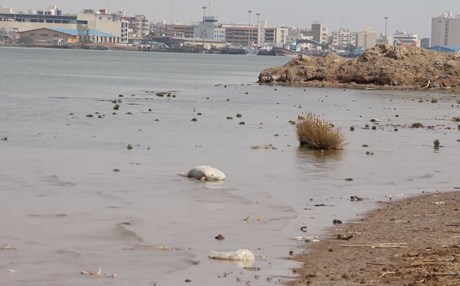

BASRA, Iraq – Water pollution continues to threaten the lives of residents of the Iraqi province of Basra.
The southern province has struggled to overcome its water crisis.
Ahmed Hilal, an environmental activist, described the situation as “an actual ecological disaster” in areas of Basra.
“Many citizens have been poisoned. The disaster had an impact on agriculture and cattle as well, we have several solutions but they’re all temporary. The local Basra government doesn’t have any future solution,” he said, noting the problem has existed since 2009.
Salty water has sent more than 110,000 people to hospital in recent months.
“Nothing is left for us because of the salt water,” said resident Shaibah.
“Farms have been destroyed, even birds have disappeared, people fled to the neighbouring cities. A lot of people have been poisoned from the salted water; in the last four days, we took two groups to the hospital,” he added.
Doctors have voiced concerns about the potential spread of diseases such as cholera and diarrhea.
“Water used to be potable before the fall of Iraq but now it became salty,” said resident Abu Aqil.
He blamed the government for not reaching agreements over shared water resources with Turkey and Iran.
“All we have now is poison. Iraq used to be the first exporter of dates but now the palms and even fish and animals are dying because of the salt in the water,” he said.
Basra gets its water from the Shatt al-Arab, a river formed by the confluence of the Euphrates and the Tigris.
In August 2018, the UN’s human rights office (OHCHR) reported an increase in contaminants in the water from sewage and industrial waste as well as high levels of salt in the water.
The OHCHR also noted a lack of water treatment plants in the region.
Due to the region’s water shortage, shattered infrastructure, and failing basic services, Basra has seen massive protests since last summer.