
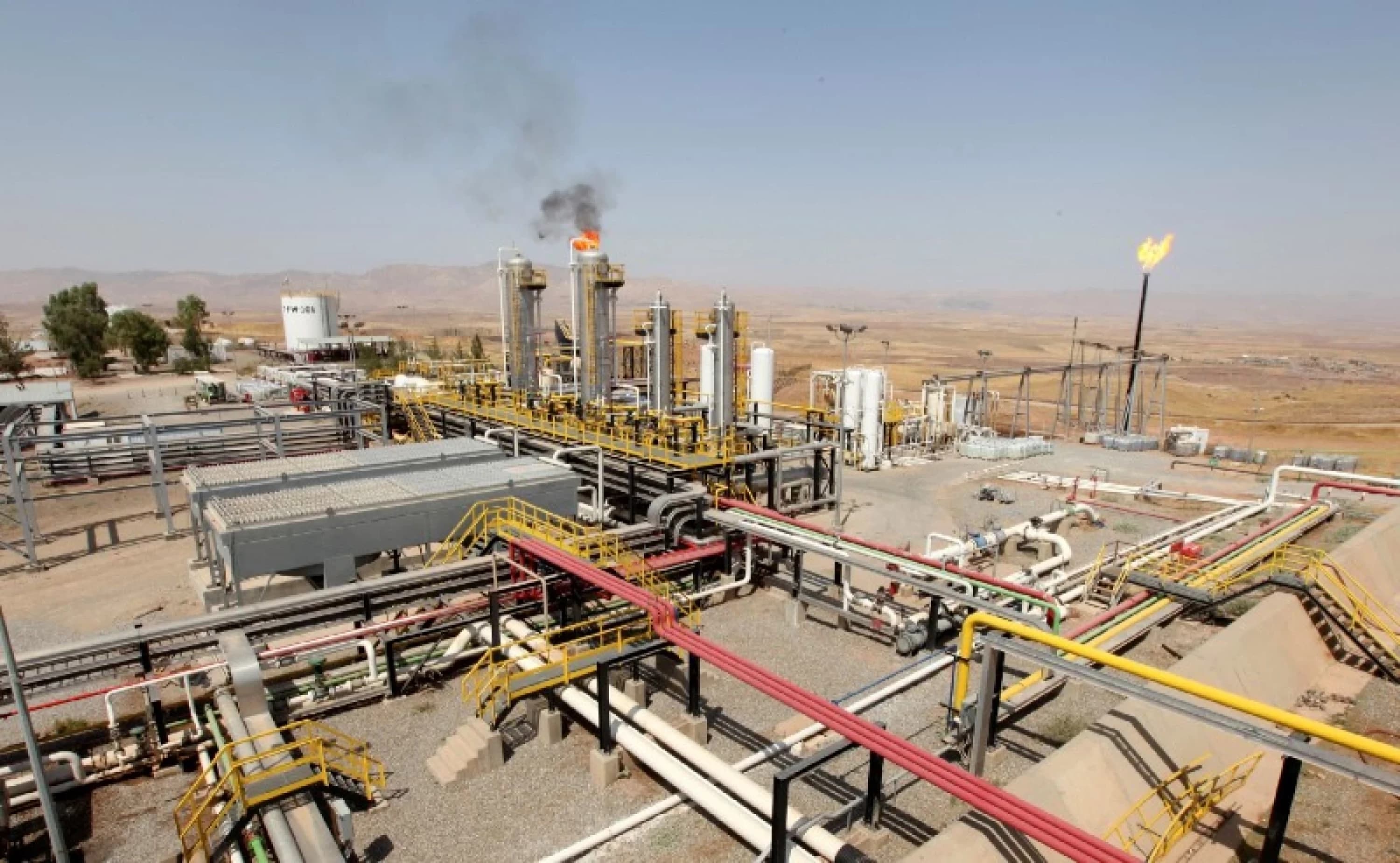
ERBIL, Kurdistan Region - Pearl Petroleum has proposed a $10.2 billion capital investment plan spanning from 2026 to 2035 with aims of more than doubling its natural gas production in the Kurdistan Region.
According to the company's latest report, the Kurdistan Gas Project 10-year expansion plan estimates an increase in production from 750 million to 1.65 billion cubic feet per day by scaling output at the strategic Khor Mor and Chamchamal fields in Sulaimani province.
The investment by Pearl Petroleum - a consortium led by Dana Gas and Crescent Petroleum - is expected to significantly boost domestic electricity supply, support thousands of local jobs, and unlock tens of billions of dollars in fiscal and environmental savings.
According to the company's latest report titled, “Kurdistan Gas Project, Two Decades of Progress and a Decade of Opportunity - Impact Assessment Report 2026,” conducted by accounting firm PwC, key highlights of the 2026–2035 expansion include:
Doubling production: Total natural gas output will surge from 750 MMscfd to 1,650 MMscfd alongside an anticipated long-term production target of 100,000 barrels per day (bpd) of crude oil, 47,000 bpd of condensate (liquid gas), and 5,500 tonnes per day (tpd) of liquefied petroleum gas (LPG).
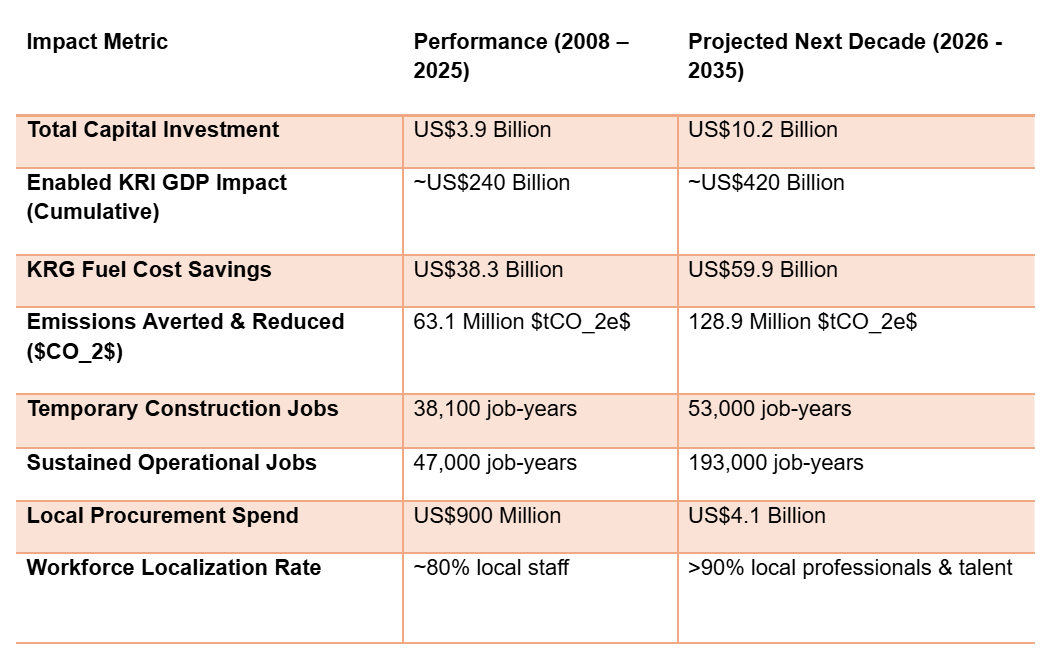
Macroeconomic partnership: According to the new PwC assessment, the expansion phase is forecasted to heavily impact the Gross Domestic Product (GDP) of the Kurdistan Region in the future.
Job creation & local sourcing: Upcoming construction developments will create 53,000 temporary job-years, while ongoing operations are projected to sustain 193,000 operational jobs through direct and indirect employment. More than 90 percent of all roles and positions will be filled by local talent, backed by $4.1 billion funneled directly into local procurement to reinforce domestic supply chains within the Kurdistan Region.
Fiscal & green dividends: Displacing heavy liquid fuels with clean natural gas is projected to save the Kurdistan Regional Government (KRG) $59.9 billion in fuel costs and prevent approximately 128.9 million tonnes of carbon dioxide emissions over the next 10 years.
Cumulative track record of regional impact
The historical financial, social, and environmental dividends delivered by the project between 2008 and 2025—and the shifts brought about across various dimensions such as total capital investment, contribution to the growth of the Kurdistan Region's GDP, job creation, etc., up to 2035 through this new investment—are presented below:
Driving social and environmental leadership
The next ten years are structurally designed to ensure that the transfer of wealth transitions hand-in-hand with human capital development and environmental targets:
Empowering local talent: Building on a proven operational history that includes a notable increase in female employment for technical and plant oversight roles, Pearl’s long-term strategy places the domestic workforce at the center of its agenda, targeting a 90 percent localization rate across all organizational tiers of the company.
Displacing diverse fuels for power generation & reducing carbon dioxide emissions: Historically, the project's gas has fueled more than 80 percent of the electricity generated within the Kurdistan Region, benefiting over 6.4 million people. Moving into 2026–2035, expanded appraisal operations in Chamchamal and Khor Mor will systematically eliminate domestic industrial reliance on fuels such as crude oil, gasoline, and diesel, simultaneously securing the environmental and fiscal health of the Kurdistan Region.
Nearly twenty years since its inception, the Kurdistan Gas Project has lived up to its name as an ambitious engineering feat. Today, it stands as a definitive global masterclass in public-private partnership, long-term strategic vision, and sustained foreign direct investment. With over $10 billion in fresh capital locked in, the coming decade will cement the project as an anchor of fiscal resilience, improving the job market and ensuring a viable clean energy transition in the Kurdistan Region.
Nearly two decades ago, in 2007, the Kurdistan Gas Project agreements were signed between Dana Gas, Crescent Petroleum, and the KRG. The initial production at the Khor Mor field commenced in 2008—just 15 months after construction began with a 180 km pipeline network, immediately altering the region's energy landscape, fueling vital power plants in Erbil and Chamchamal.
This project marks the largest private energy investment in Iraq. Since 2007, the Pearl Petroleum consortium—jointly operated by Dana Gas and Crescent Petroleum (35 percent each), alongside partners OMV, MOL, and RWE (10 percent each)—has invested more than $3.9 billion in infrastructure, placing Pearl as the largest private investor in the natural gas sector of Iraq and the Kurdistan Region.
The recent KM250 milestone outlines a decade-long roadmap building directly on the recent commissioning of the $1.1 billion KM250 plant expansion in October 2025. Funded by the US International Development Finance Corporation (DFC) and UAE-based bank facilities, along with a $350 million senior secured bond listed on the Nordic Alternative Bond Market, the project successfully boosted gas production by 50 from 500 MMscfd to the current 750 MMscfd baseline.
This milestone carries immediate impacts for Kurdistan Region power generation, underpinning the KRG’s Runaki Project, meaning ‘light’ in Kurdish, to provide reliable 24-hour electricity access and stabilize energy transfers to other regions of Iraq.
Mahmood Baban is a research fellow at the Rudaw Research Center.
The views expressed in this article are those of the authors and do not necessarily reflect the position of Rudaw.


