
ERBIL, Kurdistan Region - The Syrian government has agreed with Kurdish leaders in the country to provide education in Kurdish in northeastern Syria (Rojava), said the Syrian Interim President on Wednesday, calling the recognition of cultural and linguistic rights a government’s “duty and a legitimate right” for Kurds.
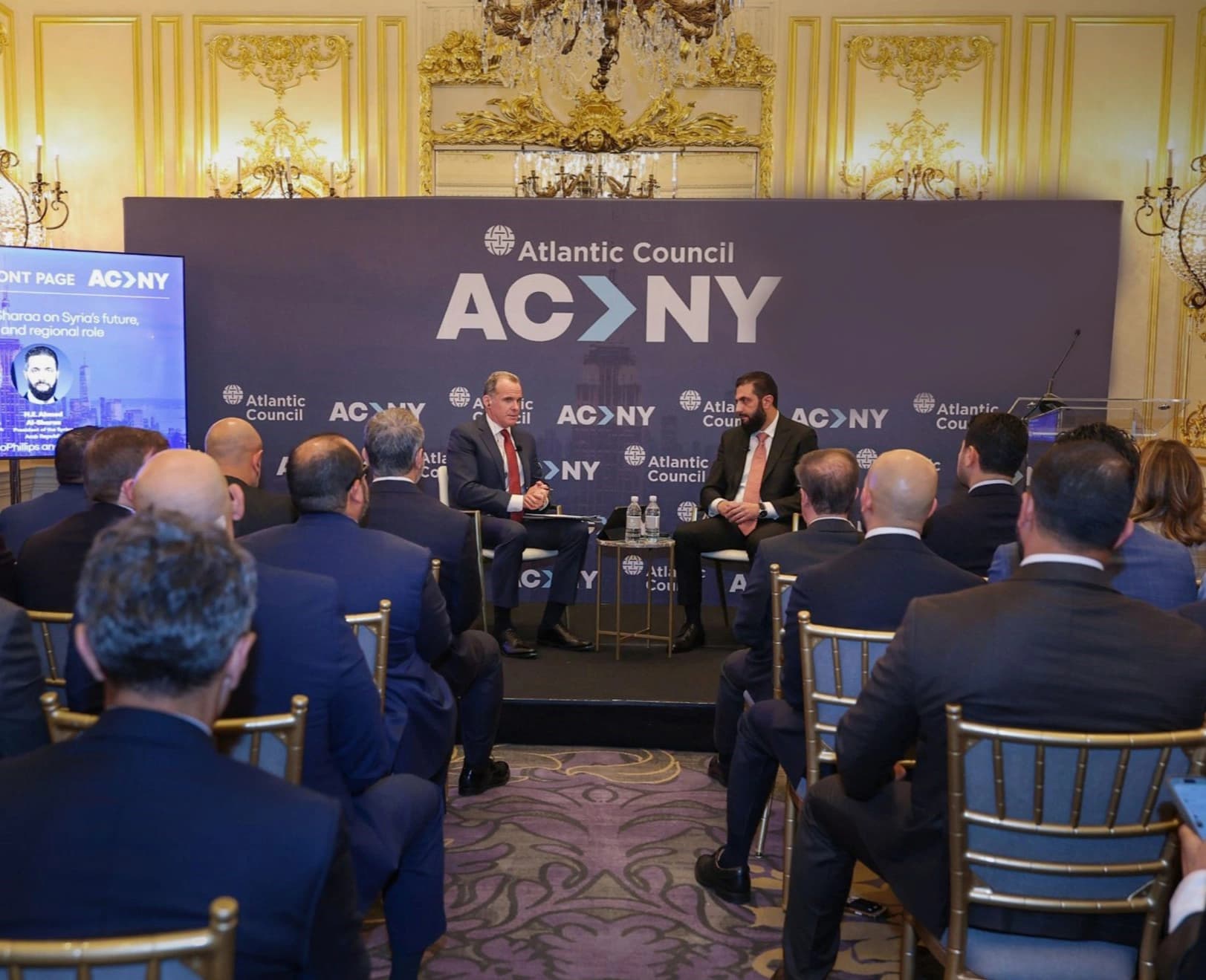
“Official recognition of Kurdish cultural and linguistic rights is both a duty and a legitimate right,” Ahmed al-Sharaa stated at a special Atlantic Council event in New York, adding that Kurds are “part of the Syrian society” and have lived within the country for generations.
“We agreed that Kurds and Kurdish-inhabited areas are going to learn in the Kurdish language,” Sharaa said, adding that technical teams at the Education Ministry are now working on how to implement the policy.
The remarks come as Kurdish language education remains one of the most sensitive issues between Damascus and Kurdish authorities in Rojava. The two sides are implementing an agreement reached in January that also provides for the integration of the Kurdish-led Syrian Democratic Forces (SDF) into Syria’s state structures.
The Interim president said Wednesday that the the government issued Presidential Decree 13 before the integration of Kurdish-led forces because recognizing those rights was an obligation toward Kurds in Syria.
“After 100 years, the Kurds had their rights recognized,” Sharaa said, describing the decree as having received a warm reception.
Former US official Brett McGurk called Decree 13 a "remarkable document" but raised concerns over renewed tensions in Hasaka, including the killing of a Kurdish fighter serving with Syrian security forces.
Decree 13, issued by Sharaa in January, formally recognized Syrian Kurds as an integral part of the Syrian people and their cultural and linguistic identity as part of the country’s national identity. It also committed the state to protecting Kurdish cultural and linguistic rights.
The Syrian Education Ministry issued implementing instructions in late August allowing Kurdish to be taught as a national language in public and private schools in areas with significant Kurdish populations.
The current rules provide three Kurdish classes per week, with grades counting toward students’ final averages, while students can study social studies, history, geography, and philosophy in either Kurdish or Arabic during the first academic year.
Kurdish-led authorities have used Kurdish as the main language of instruction across much of the curriculum in Rojava for more than a decade. The new Damascus system is being introduced as a transitional measure, while questions remain over the longer-term scope of Kurdish-medium education.