
ERBIL, Kurdistan Region - The Kurdish-majority province of Hasaka in northeast Syria (Rojava) is among the country’s most underserved regions in healthcare, with just five public hospitals and a damaged children’s hospital whose operating department has been destroyed, an official from Syria’s health ministry told Rudaw.
Wasil al-Jirk, director of health institutions at Syria’s health ministry, told Rudaw's Nushin Heme on Thursday that Hasaka “tops the list of provinces most in need of services due to geographical distance” from Damascus.
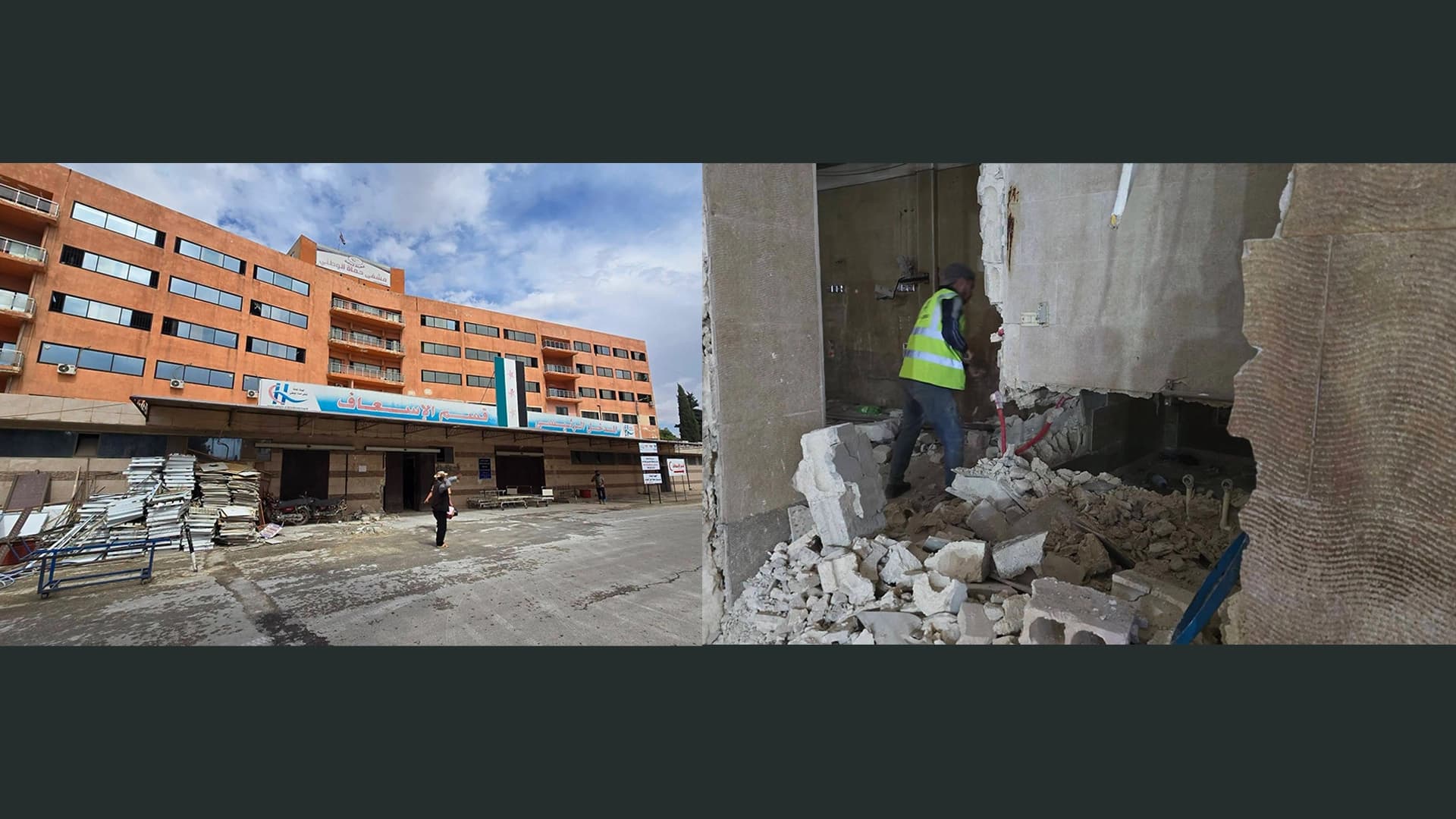
Hasaka hosts just five of Syria’s 153 public hospitals, he said, citing health ministry figures, to serve a population of more than half a million. The province’s children’s hospital has sustained damage, including the destruction of its operating department.
The shortages reflect broader challenges facing Syria’s healthcare system after years of conflict and underinvestment. The World Health Organization (WHO) warned in February that 16.5 million people would need humanitarian assistance in 2026.
Nationwide, 38 public hospitals and healthcare facilities, or approximately 24.8 percent of the country’s 153 public hospitals, are fully or partially inoperable, according to the ministry.
Rural Damascus has the highest number of affected facilities with 11, followed by Homs with nine, Deir ez-Zor with five and Aleppo with four. Raqqa and Hama have three each, Idlib has two and Hasaka has one.
To address the crisis, the health ministry has launched a 2026-2028 strategic recovery plan aimed at rebuilding healthcare infrastructure, addressing shortages of specialist doctors and nurses, and restoring emergency departments, intensive care units and cancer treatment services.
The plan also envisages incentives for medical personnel, the redistribution of healthcare workers to underserved areas and quarterly implementation reviews through 2028. Funding is expected to come from the state budget, international partnerships and UN agencies.
In February, the United Nations Development Programme (UNDP) announced a €30 million ($33.6 million) German-funded agreement with the ministry to rehabilitate five public hospitals in Hama, Homs, Idlib, Daraa and Deir ez-Zor.
According to the UNDP, upon the completion of the 36-month project, the hospitals are expected to restore around 520 hospital beds and improve healthcare access for approximately 895,000 people.
Regarding the integration of the Kurdish-led Democratic Autonomous Administration of North and East Syria’s (DAANES) health authority into Syria’s health ministry, Jirk said that the process remains incomplete.
“The process is still ongoing and under implementation,” he said, adding that it “requires time” because multiple ministries and other relevant parties are involved.
The ministry did not clarify whether healthcare workers previously employed by the Kurdish-led administration had been transferred to its payroll or when the integration would be completed.
Under the Syrian law regulating the status of public employees in the new Syria, "all employees will be appointed under contracts, and accordingly, the signing of these contracts is itself the merger process," Syrian Health Minister Musab al-Ali told Rudaw in August.
The Syrian interim leadership began administering and rehabilitating public service projects in Hasaka in February.
The efforts came in the aftermath of the landmark January 29 agreement between Damascus and Rojava, which followed weeks of escalation that saw Syrian government forces and affiliated armed groups seize territory previously held by Kurdish-led Syrian Democratic Forces (SDF) in eastern Aleppo, Raqqa, Deir ez-Zor, and Hasaka provinces.
Under the agreement, a permanent and comprehensive ceasefire was established, alongside provisions calling for the integration of civil and military institutions in Rojava into the Syrian state.
Since its implementation, several SDF-linked figures have assumed government roles, including positions within the defense and internal security structures, as well as local administration posts in Hasaka province.