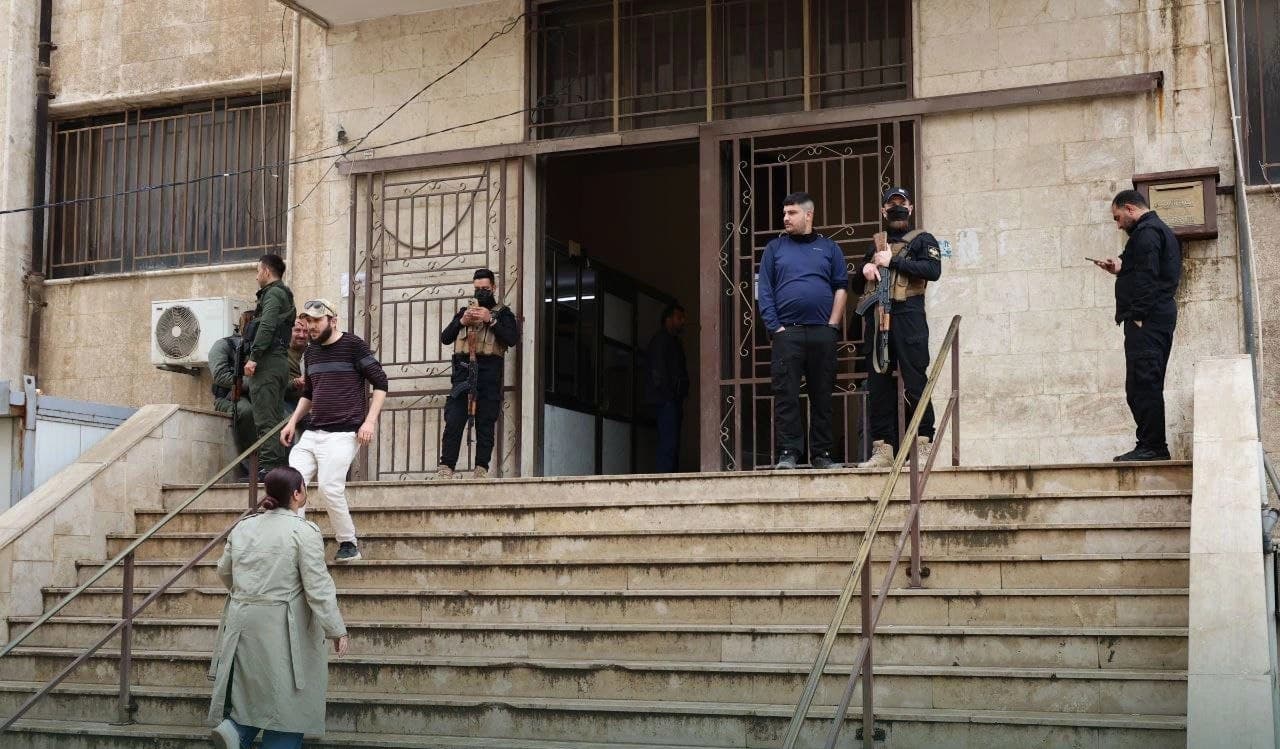

ERBIL, Kurdistan Region - The Judicial Complex in the Kurdish city of Qamishli resumed operations on Sunday after nearly two years of suspension, restoring judicial services to residents of the city and surrounding areas amid efforts to reactivate state institutions across Hasaka province in northeastern Syria (Rojava).
The reopening took place in the presence of Hasaka Governor Nour al-Din Ahmed and several judges, Syria’s state news agency SANA reported.
Hasaka Advocate General Judge Ghazi al-Sheikh Ibrahim described the reopening as “an important step toward strengthening the work of judicial institutions in the city,” adding that it would streamline litigation procedures and ease the burden on residents who previously had to travel to the city of Hasaka to pursue their cases and complete legal paperwork.
The resumption of operations is also expected to expedite rulings, address outstanding cases, and ensure that residents of Qamishli and its surrounding countryside can access judicial services and exercise their rights through established legal procedures, he added.
Governor Ahmed told reporters on Sunday that Hasaka courts will follow rulings issued by the Justice Ministry.
The Palace of Justice in the city of Hasaka resumed operations in October following a suspension of nearly one year and ten months. Courts in other districts and sub-districts are also expected to reopen as part of a broader plan to restore judicial institutions and expand public services across the province.
In April, a delegation from Syria’s Justice Ministry, headed by Attorney General Judge Hassan al-Turba, met with Ahmed to discuss the reactivation of judicial institutions across the province.
However, the restoration of judicial authority in Rojava has been a contentious issue amid the ongoing integration process between Damascus and the Kurdish-led administration.
In April, Khalid Ibrahim, a member of the Kurdish administration’s foreign relations department, told Rudaw that Kurdish authorities would not hand over the Qamishli court to Damascus without an agreement, accusing Syrian authorities of seeking to appoint former Ba'athist judges and marginalize Kurds within the judiciary.
“It is clear that Damascus’s approach to integration is veering away from the legal, judicial, and political meaning of integration,” Ibrahim said, adding that while Kurdish authorities had taken “some steps” toward integration “in good faith,” the judiciary remained “truly a matter of debate and negotiation.”
The dispute intensified after a Syrian Justice Ministry delegation arrived in Qamishli in April to take control of the court but was prevented from entering the complex.
Ahmad al-Hilali, spokesperson for the Damascus team overseeing integration with the now-dissolved Kurdish-led Syrian Democratic Forces (SDF), told Rudaw that the delegation had intended to “obtain the names of the Autonomous Administration’s employees and judges” so they could be incorporated into the state judiciary based on their qualifications and expertise.
The January 29 agreement between Damascus and the SDF envisaged integrating the Kurdish-led administration’s military and civilian institutions into the Syrian state apparatus while retaining their existing employees.