
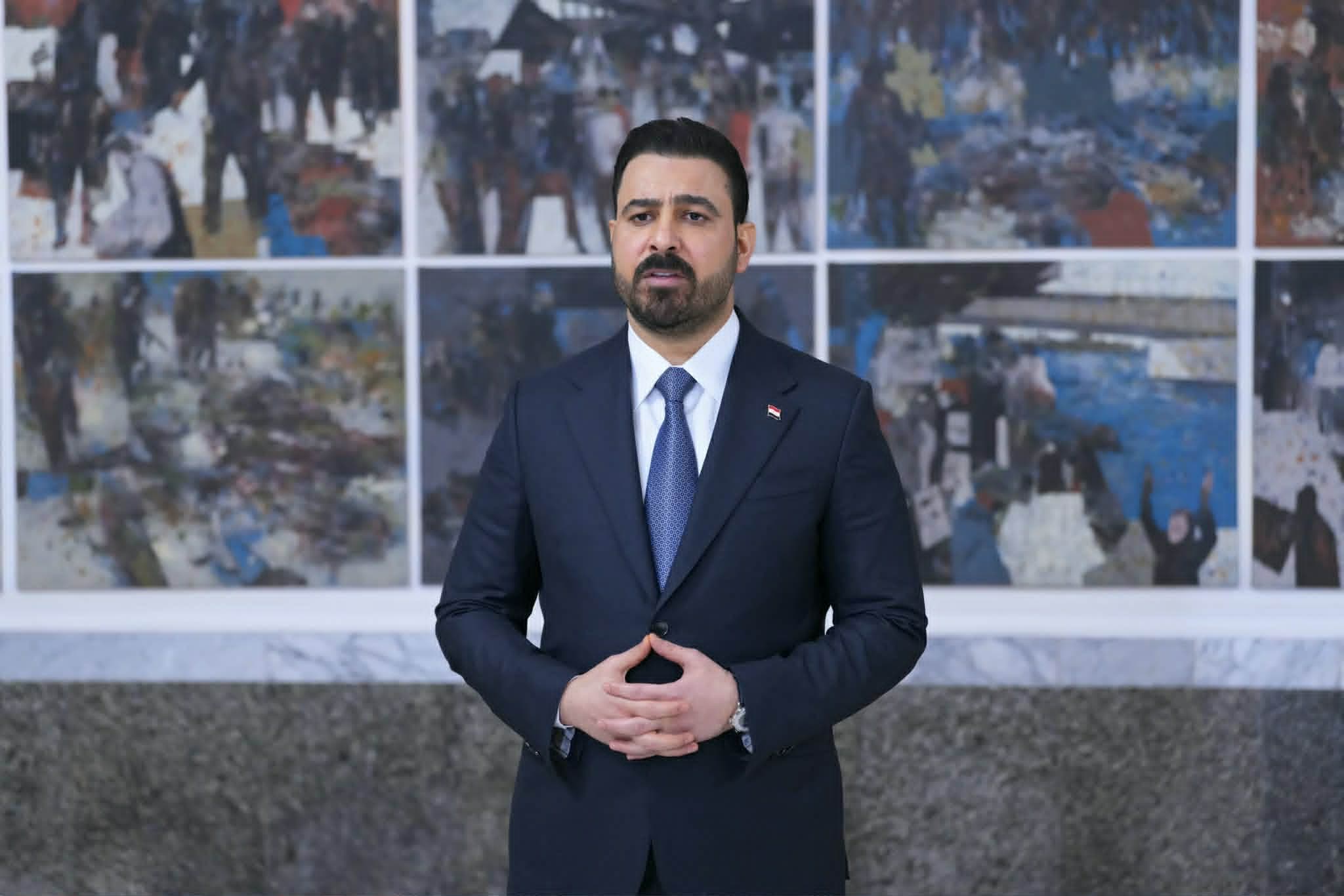
ERBIL, Kurdistan Region - Iraqi Prime Minister Ali al-Zaidi is expected to visit Washington in the second half of July to discuss strategic ties between Iraq and the United States, with economic cooperation topping the agenda, according to Iraqi government spokesperson.
Speaking to Rudaw on Saturday, Haider al-Aboudi said the visit would focus on strengthening bilateral relations through an economic lens.
“The files concerning the strategic relations between the two countries will be discussed during the visit. The agenda begins with economic issues because the current Iraqi government’s vision is that the economy is the engine of the state,” Aboudi said.
He added that Baghdad’s approach to international relations is increasingly centered on economic interests.
“We begin from the economic aspect in defining our shared interests with countries in the region and around the world,” he said.
Zaidi’s anticipated visit comes as Iraq seeks to balance its strategic partnership with Washington while expanding economic cooperation and attracting foreign investment. Baghdad and Washington have maintained regular dialogue through mechanisms such as the Higher Coordinating Committee under the Strategic Framework Agreement, with security, energy, and economic issues featuring prominently in bilateral discussions.
The planned visit follows a phone call between US President Donald Trump and Zaidi, during which Trump extended an invitation to Zaidi to visit Washington.
Addressing the issue of salaries for public employees in the Kurdistan Region, Aboudi said there is an established framework between Erbil and Baghdad to ensure continued payments.
“There is an agreed-upon text between Erbil and Baghdad that is based on the law and Federal Court decisions,” he said, stressing that the Iraqi government considers itself responsible for all state institutions under the country’s constitutional and legal framework.
The issue of Kurdistan Region salaries has been a longstanding point of contention between Erbil and Baghdad, with disputes over oil revenues, budget allocations, and interpretations of federal court rulings leading to repeated delays in salary payments for the Region’s public sector employees. Officials from both governments have held multiple rounds of talks in recent months aimed at establishing a sustainable mechanism to prevent future disruptions.
Aboudi also reiterated the government’s commitment to bringing all weapons under state control, describing the issue as a key objective of the cabinet’s agenda.
“Controlling weapons and limiting them exclusively to the hands of the state is one of the most important pillars of the government’s program, aimed at strengthening national sovereignty and enforcing the rule of law,” he said.
The question of restricting arms to state institutions remains one of the most sensitive issues facing Iraq. The government has repeatedly pledged to strengthen state authority and regulate the activities of armed groups operating outside formal military structures. However, analysts say achieving that goal will require broad political consensus and complex negotiations with influential factions that have significant political and military influence across the country.
Malik Mohammed contributed to this article.
.jpg&w=3840&q=75)
