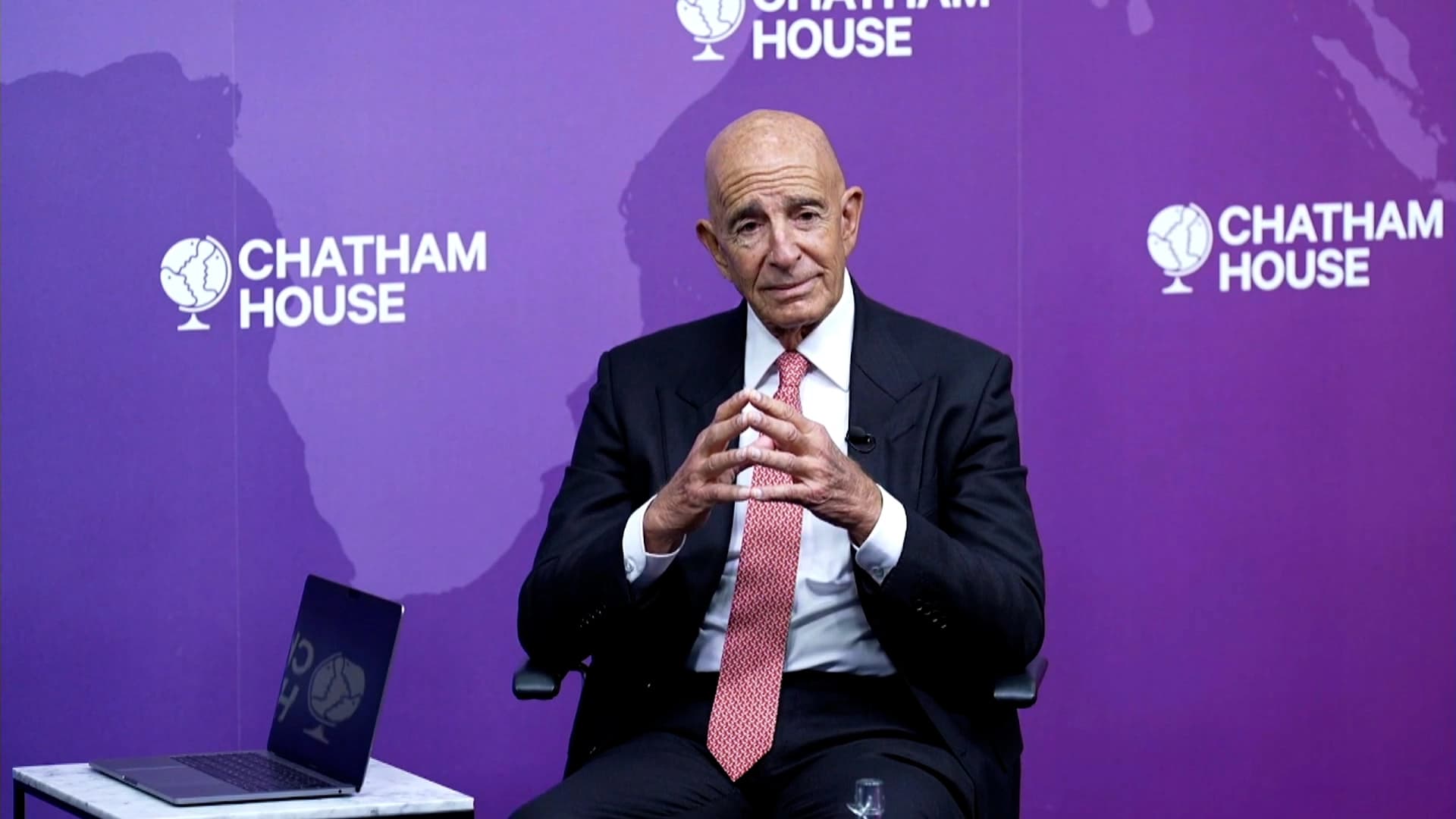

ERBIL, Kurdistan Region - US Special Envoy for Syria and Iraq Tom Barrack urged on Wednesday for Kurdish leaders to bridge their political differences, move past what he called "tribal dismays," and strengthen coordination with Baghdad, saying unity was essential to Iraq’s stability and prosperity, as well as US and regional interests.
Speaking at a Chatham House event in London on Wednesday, Barrack made the remarks when asked what safeguards Washington could support to ensure Baghdad’s centralized government does not undermine the Kurdistan Region’s constitutionally recognized federal region status and Kurdish representation.
Barrack underscored the US' stance of nonintervention while affirming that the Kurdistan Region and the two main Kurdish political families have long-standing ties with Washington, stating “The Barzanis and the Talabanis have always been great friends of America.”
“This is an Iraqi issue; This is an Iraqi decision; This is not an American decision,” said Barrack, while adding that “our role is to not confuse the direction of Iraq being Iraq.”
“My advice, the [US] president's advice, is get over it.”
“I cannot go back to Congress and explain the complexity of the Iraqi constitution and the federalist delineation of the Kurdistan Region and how it dovetails with Baghdad, and then say besides that, we have a series of disputes of families within the Kurdistan Region that are subjecting our American companies and our international companies, who are the source of revenues to the entire region … to be subjugated to what's happening now.”
The two ruling parties of the Kurdistan Region, the Kurdistan Democratic Party (KDP) and the Patriotic Union of Kurdistan (PUK), have long been embroiled in an ongoing battle over federal ministerial posts with competing federal alliances, reflected in a lack of a unified position toward Baghdad as the Kurdistan Regional Government (KRG) remains in caretaker status more than two years after inconclusive parliamentary elections in 2024.
The Region last week saw mounting friction between the two family-led parties following the KDP's initiative to resume the Kurdistan Parliament last week, ending two years of legislative paralysis.
The parliament reconvened through a KDP-led initiative supported by minority representatives, smaller political groups and lawmakers who broke ranks with their parties, including three PUK members. A total of 52 lawmakers attended the session, narrowly surpassing the 51-member quorum required in the 100-seat legislature.
The move prompted an immediate backlash from PUK leader Bafel Talabani, who called the move “illegal” and announced on Thursday his party’s withdrawal from the Kurdistan Regional Government (KRG) cabinet and boycott of subsequent meetings in protest against parliament's reactivation without its participation.
The withdrawal of the PUK from the government has resurfaced fears of backsliding into a 'Two-Administrations' power-sharing arrangement between the two ruling parties. Between 1998 and 2006, the PUK administered Sulaimani and the KDP exercised jurisdiction over Erbil and Duhok, with both operating their own government and parliament while receiving a separate budget share from Baghdad.
Following a meeting with PUK political bureau member Darbaz Kosrat Rasool and KRG natural resources deputy minister Ahmed Mufti, Barrack said Wednesday on X that Washington supports “a strong, united Kurdistan Region.”
"We need unity from the region, we need unity... with the KRG and Baghdad," Barrack emphasized in his speech, adding that "We need to get over these tribal dismays."
"My sound professional, intellectual, advice is 'get over it.'"