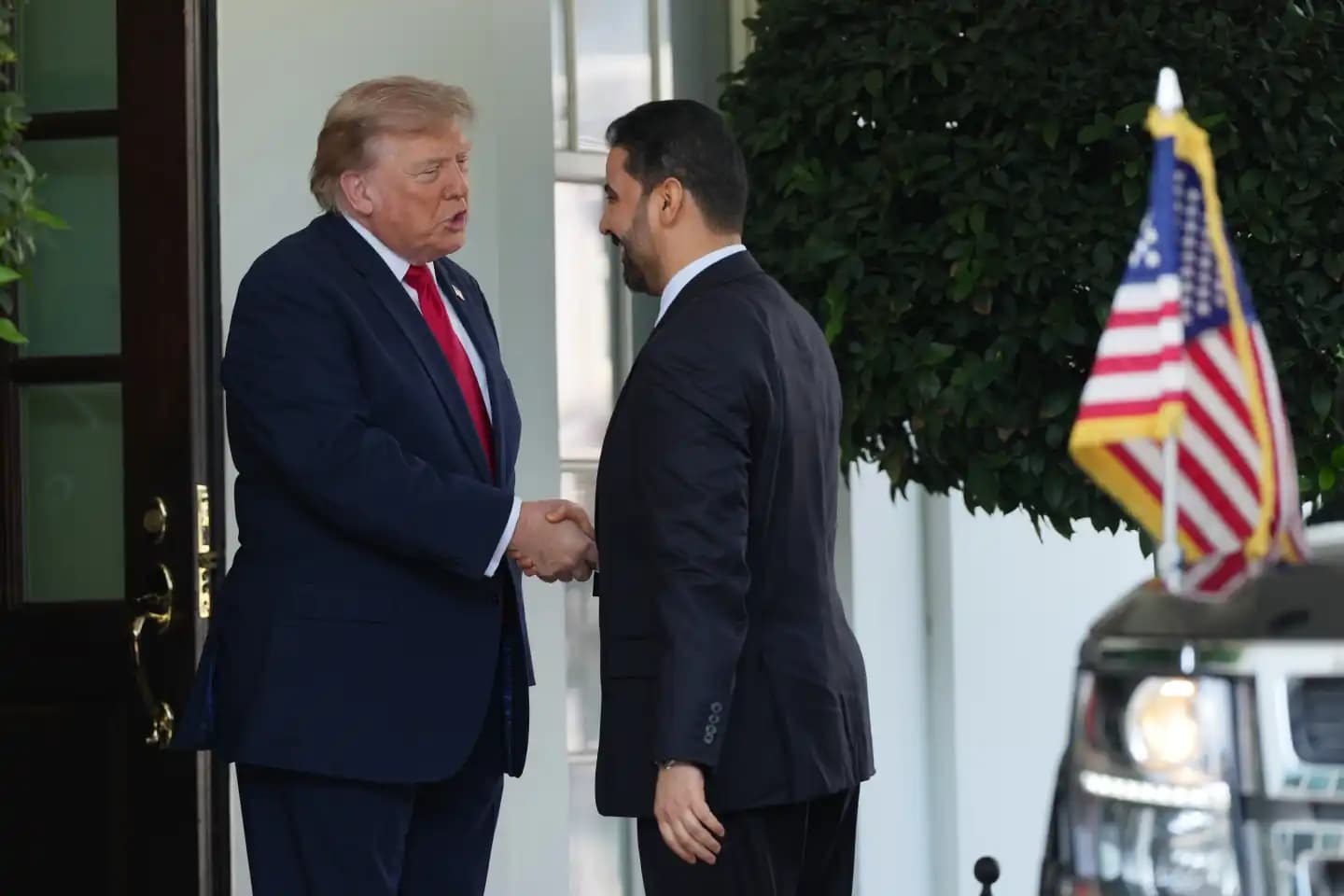

ERBIL, Kurdistan Region - Washington expects Iraqi Prime Minister Ali al-Zaidi to “follow through” on commitments made to US President Donald Trump during their meeting earlier in July, including reining in armed groups and preventing attacks “in and from” Iraqi territory, a spokesperson for the State Department told Rudaw on Tuesday.
The United States anticipates Zaidi’s fulfillment of commitments regarding counter terrorism, as well as to “prevent attacks in and from Iraqi territory, and build a U.S.-Iraq partnership that serves both countries’ interests,” the spokesperson told Rudaw’s Diyar Kurda through an email initially sent on Friday.
“Our goal remains the same: a sovereign, secure, and prosperous Iraq that can best deliver for its people and benefit the region,” the spokesperson’s Tuesday response read.
The response came days after the remaining ministers and deputies in Zaidi’s cabinet on Thursday received the vote of trust from the parliament - a process that has been delayed since the government formation six months prior in May.
Vacant positions included nine ministers and three deputies to the prime minister. One of the deputies is Laith al-Khazali from the Sadiqoon movement - the political wing of the Asa’ib Ahl al-Haq (AHH) armed faction - with both Khazali and the AHH designated by the US as a Specially Designated Global Terrorist (SDGT) since 2020 and Foreign Terrorist Organization, respectively.
Asked whether the appointment drew concerns from Washington, US Congressman Joe Wilson condemned Iraq’s parliament appointment of Khazali as deputy prime minister, saying he is “no better than ISIS, maybe even worse,” and calling to “free Iraq from Iran.”
Khazali’s appointment was one of the issues delaying the completion of Zaidi’s cabinet.
Earlier in October, Mohammed al-Baldawi, head of the Sadiqoon parliamentary bloc, told Rudaw’s Gashaw Khalid that the parties had settled their disagreements over the remaining ministries and said what he described as US "objections" to some nominees no longer stood in the way of completing the cabinet.
His statement came days after the scheduled departure of the US-led Global Coalition against the Islamic State.
Zaidi met with President Trump in the White House on July 14, framing his visit as an economic rather than a military partnership and reaffirming that the issue of restricting weapons to state control was "non-negotiable.”
"The Iraqi decision is in the hands of Iraqis, and our forces are capable of protecting our lands," he stressed at the time, vowing that "after September 30, we will not allow any side to carry weapons outside state control."
Zaidi noted that Iraq's current economic situation necessitates "a strategic partner" to help steer the economy forward, pointing to the US as "the most strategic partner in the world" in that regard.
While the Iraqi premier vowed to disarm and disband the armed groups aligned with Iran by September 30, the deadline has been postponed to June 30, 2027 following disagreements and refusals of some factions to comply.
Operating under the umbrella group of “the Islamic Resistance in Iraq (IRI),” armed factions backed by Iran sided with Iran during the war, launching more than 750 missile and drone attacks against alleged US targets in and outside Iraq. The targets included US diplomatic offices in the country.
In March, Faiq Zaidan, head of Iraq’s Supreme Judicial Council, warned that attacks on diplomatic missions constituted serious crimes prosecutable under anti-terrorism legislation, with penalties potentially reaching death.
[Updated at 11:06 pm]