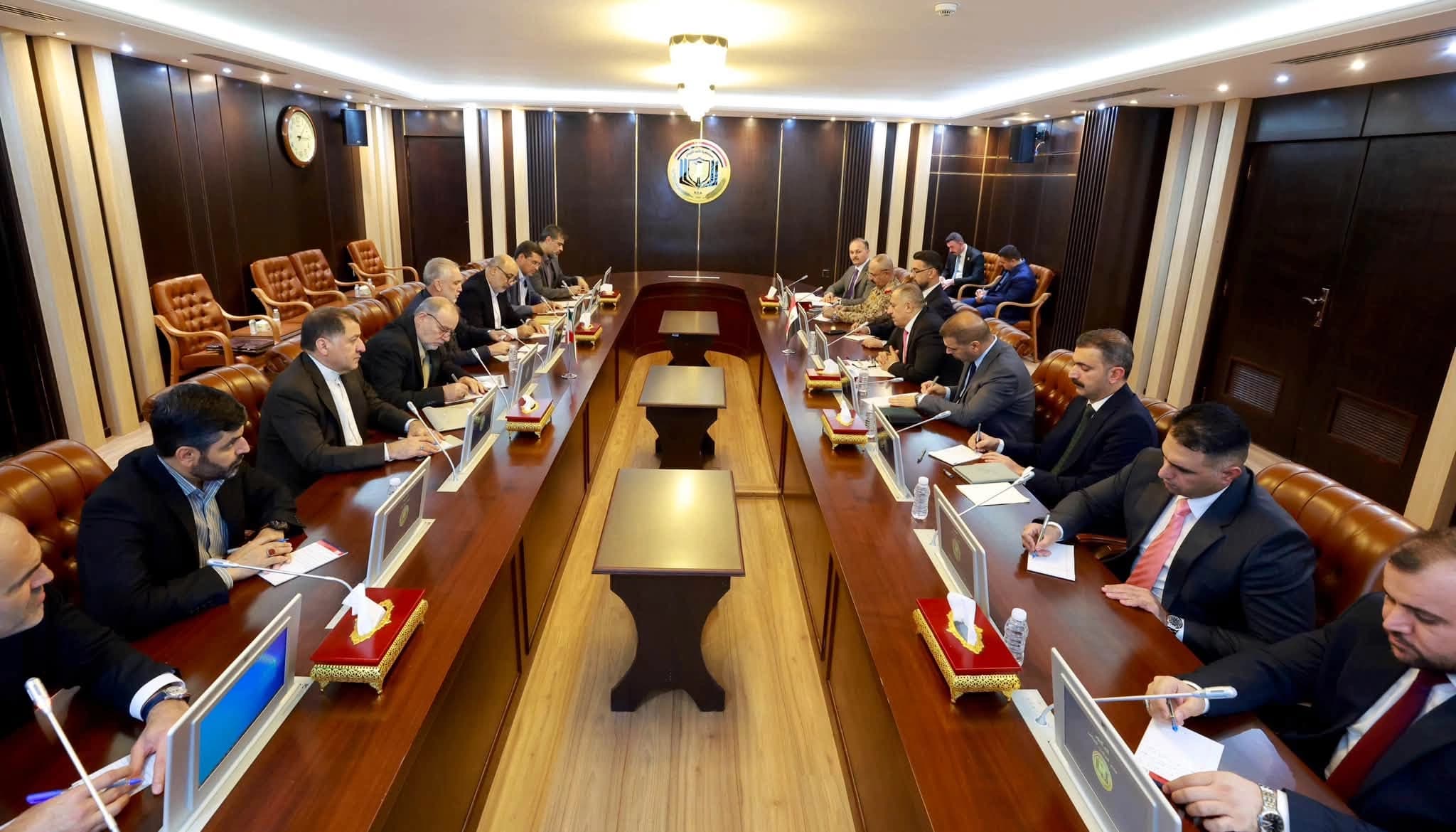
ERBIL, Kurdistan Region - A technical delegation from the Kurdistan Regional Government’s (KRG) finance ministry arrived in Baghdad on Wednesday to hold talks about the delayed salaries of the Region’s public employees, a senior source from the ministry told Rudaw.
"A technical delegation from the [KRG’s] finance ministry arrived in Baghdad, upon a request from the Iraqi Council of Ministers yesterday [Tuesday]," the source said.
The visit is “specifically aimed at restarting the talks [between Erbil and Baghdad] on the salaries of civil servants and the work of the joint committees and their resumption,” the source added.
Tensions between the two sides escalated in late May when the federal finance ministry halted budget transfers, accusing the KRG of exceeding its 12.67 percent share and failing to fulfill oil export commitments. The suspension impacted the salaries of over 1.2 million public employees in the Kurdistan Region.
However, the standoff began to ease earlier this month when Erbil and Baghdad reached a deal committing the KRG to export all of its oil - estimated at 230,000 barrels per day - through Iraq's State Oil Marketing Organization (SOMO). In return, Baghdad pledged to release salaries for the Region’s civil servants that have been delayed for months.
Baghdad recently sent 975 billion dinars (around $737 million) to cover May salaries. However, the deal’s implementation has stalled due to unresolved technical and financial issues.
Importantly, the Kurdish delegation’s visit to Baghdad notably coincided with Iraqi Oil Minister Hayyan Abdul Ghani’s Wednesday announcement that a new agreement has been struck with the KRG to resume oil exports from the Kurdistan Region through Turkey’s Ceyhan port.
During a visit to Kirkuk, Abdul Ghani said the Kurdistan Region is currently producing 130,000 bpd from “operational fields.” Of that, 50,000 bpd will be allocated for domestic use in the Region, while “the remaining 80,000 barrels, which will be collected” by SOMO and “exported through the Turkish port of Ceyhan.”
A day earlier, Abdul Ghani had noted during a cabinet meeting in Baghdad that the Region’s oil production had dropped by 100,000 barrels per day due to “attacks by unmanned drones” on Kurdish energy infrastructure, making it impossible to meet the previously agreed quota of 230,000 bpd.
In light of the new agreement announced by the Iraqi oil minister, hopes are high that breakthroughs on the salary dossier will soon follow.